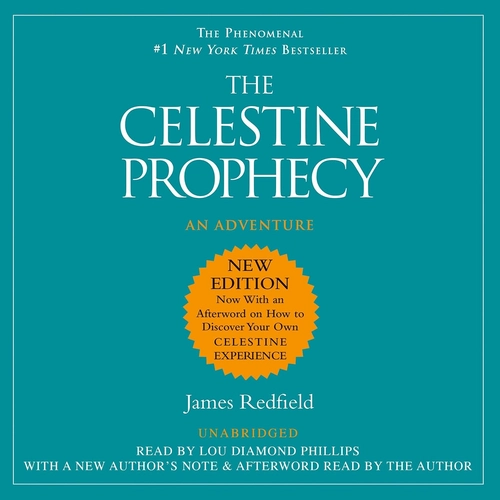
I bought The Celestine Prophecy in a dusty airport bookstore during a layover I did not want to take. My flight was delayed four hours, my phone was dying, and the only other option was a thriller about a serial killer who collected teeth. So I picked up James Redfield’s 1993 phenomenon with the smugness of someone who reads literary fiction and does not believe in cosmic signs.
I finished it before the plane landed.
Here is the uncomfortable confession: I am still not sure if this book is good. But I am certain it changed something in me, and I have spent the last decade trying to figure out what that something was. The central question this review keeps circling is simple: can a book with clunky dialogue and a plot that reads like a Dan Brown draft still deliver genuine spiritual insight, or is it just a comfortable illusion for people who want answers without doing the work?
The Narrator Who Is Everyone and No One
The unnamed narrator is, honestly, a blank. He is a man who feels something is missing, receives a mysterious manuscript, and gets chased through the Peruvian jungle by government agents who want to suppress its nine insights. He meets a series of guides who each explain one insight to him, then he escapes to the next location.
It is not subtle. The villains are cartoonishly evil. The dialogue sounds like fortune cookies written by a philosophy professor. And yet.
What struck me most was how Redfield uses this emptiness deliberately. The narrator has no personality because he is supposed to be you. I rolled my eyes at this tactic at first. Then I caught myself noticing coincidences in my own life. A friend called right when I was thinking about her. I found a book I needed on a park bench. I started paying attention, and attention became a habit.
The core conflict is internal, despite all the jungle running. The narrator must decide whether to trust the invisible patterns or dismiss them as randomness. That is the real chase. I found myself gripping the pages not because of the government agents, but because I recognized my own resistance in his skepticism.
The Energy Exchange That Caught Me Off Guard
The book’s central claim is that human history moves through stages, and we are approaching the ninth insight: the realization that we are moving toward a fully spiritual culture on Earth. This is where Redfield gets both his power and his problems.
The core theme is energy exchange. We are all consciously or unconsciously draining or nourishing each other’s energy. Control dramas, the book calls them: the aloof, the poor me, the interrogator, the intimidator. I read this section three times. Then I started noticing my own control drama in meetings, in family gatherings, in arguments with my partner. It was uncomfortable. It still is.
The key imagery is the forest clearing where the narrator finally sees energy fields around plants and people. It sounds ridiculous when I write it down. But Redfield’s gift is making you feel like you have seen this too—in the shimmer of heat on a road, in the way a room changes when a certain person walks in. He does not prove anything. He simply invites you to look differently.
A Framework That Sticks, a Novel That Doesn’t
The problems are real. The prose is serviceable at best. The plot is thin. The characters are archetypes rather than people. Some readers will find the New Age framing off-putting, especially the sections about the Mayan prophecy that have not aged well historically. I do not think Redfield was being malicious. I think he was sincere, and sincerity does not always produce good art.
What the book does brilliantly is create a framework for noticing. The nine insights are simple enough to remember, practical enough to apply, and open-ended enough to adapt. I have used them in therapy, in my marriage, in my work. I have recommended this book to exactly three people, all of whom needed it at specific moments. Two of them had the same reaction I did: initial skepticism, then reluctant fascination.
People who feel stuck will find something here. People who sense patterns they cannot explain. People who want a spiritual path without religious dogma. If you’re looking for rigorous theology, literary craft, or historical accuracy, skip it. If you cannot tolerate the phrase “energy field” without rolling your eyes, skip it.
I closed the book and felt something I did not expect. Not euphoria, not enlightenment. Just a quiet recalibration. The way you feel after a long conversation with someone who actually listens.
This book will not give you answers. It will not fix your life or reveal the secret of the universe. But it will make you slightly more attentive to the coincidences you keep dismissing, and that attention, I have found, compounds. It becomes a way of being.
Redfield’s most quoted line is this: “The moment you have in your heart this extraordinary thing to do, and you are just waiting for it to happen, then the coincidences will line up for you.” I am still not sure I believe it. But I have started acting like I do, and that has made all the difference.

