I have a confession. I graduated college with a degree in a field that, five years later, barely exists the way I studied it. I felt, for a while, like a fool. Like I had spent years memorizing a map of a country that had sunk into the ocean. Then I picked up Henry Adams’s “The Education of Henry Adams,” a book from 1918, and I thought: this old man from a political dynasty, he felt the exact same thing. But he felt it a hundred years before me. How is that possible?
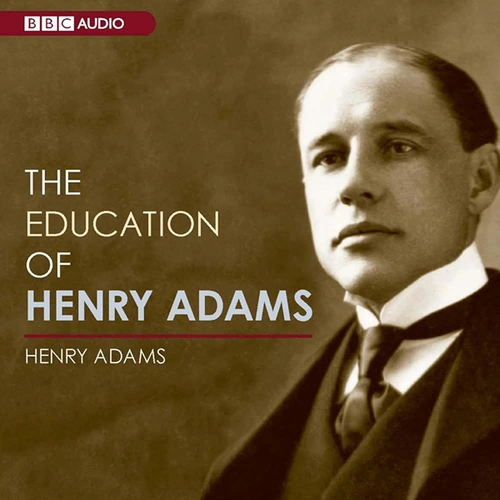
The Protagonist Who Was Never Ready
Henry Adams was born into the American elite. His great-grandfather was a president. His grandfather was a president. He was supposed to inherit the world, or at least understand it. But here is the thing. He didn’t. The book is not a story of triumph. It is a story of perpetual, almost comedic, failure to catch up.
Adams trained as a diplomat, a historian, a man of letters. He went to Harvard. He studied law. He traveled to Europe. And then, the world changed. The steam engine became the dynamo. The telegraph replaced the letter. The Civil War shattered the old order. Adams writes with this dry, weary honesty: he never felt prepared. He describes himself as a “stable companion to statesmen,” always a little behind, always observing the action rather than driving it.
The core conflict is not with enemies or villains. It is with time itself. He watches the 1900 Paris Exposition, staring at the giant dynamos, these new machines that generate electricity. He realizes he has no framework for this. His education taught him about old truths, about the unity of God and nature. But the dynamo represents something else: a form of force that is invisible, infinite, and utterly indifferent to his understanding. I found myself nodding along, embarrassed. How many times have I felt the same way, staring at a new algorithm or a shift in the cultural winds? The suspense of the book is not about what happens next in his life. It is about whether he will ever find a way to think that actually works.
The Dynamo and the Virgin
Adams’s central trick is a contrast between two images. The Virgin and the Dynamo. The Virgin, in medieval times, was a symbol of unity. She gave meaning to everything: art, architecture, love, faith. People built cathedrals for her. They understood their world through her. The Dynamo, in Adams’s time, is the opposite. It is pure force. It generates power without purpose. It has no story. It has no meaning. It just spins.
This is the book’s deepest insight. Adams argues that the twentieth century, and our century now, is defined by a multiplication of forces we cannot synthesize. We have more knowledge than ever. More data. More speed. But we have lost the ability to connect it all into a coherent picture. He calls himself a failure because he cannot “educate” himself into a system that holds. He tries to be a scientist. He tries to be a historian. He tries to be a philosopher. None of them stick.
I think this is why the book has survived. It is not a manual. It is a confession. Adams admits that his formal education, the prestigious schools, the classic texts, left him completely blind to the actual forces shaping his world. He calls education a “child’s pursuit” in a world that has “not yet learned to think.” That sentence hit me hard. I realized I have been treating education as a destination, a collection of facts to be stored. Adams shows that real education is something else. It is the humiliating, ongoing process of admitting you don’t know, and starting over.
The Gift of Not Knowing
So what is the point of reading a book about a man who feels he failed at learning? It sounds depressing. It is not. It is strangely liberating. Adams does not tell us to go back to the classics or to embrace technology. He tells us something more uncomfortable and more useful.
He tells us that the feeling of being obsolete is not a sign of personal failure. It is a sign that you are alive at a moment of genuine change. The people who feel perfectly educated, perfectly adapted, are probably the ones who are sleepwalking. Adams, by confessing his confusion, gives us permission to be confused too.
There is a quiet courage in his honesty. He does not pretend to have the answer. He does not write a grand solution. He just says: I tried. I failed. I kept trying. And in that trying, I found something. Not certainty, but clarity about my own limits.
I will be honest. I did not finish the book feeling smarter. I finished it feeling more human. Like my confusion is not a bug. It is a feature of living in a world that accelerates faster than any single mind can track. Maybe that is the real education. Not the one that gives you answers, but the one that teaches you how to live with the questions.
Core Insight: The best education is not one that makes you feel prepared. It is one that makes you honest about your unpreparedness and gives you the strength to keep learning anyway.
