I went to a friend’s apartment last week. She was going through a breakup. I sat on her couch, holding a mug of tea I didn’t want, and I kept thinking: what am I supposed to say? Should I tell her I know how she feels? I don’t, really. My breakup was different. Hers is messier, deeper, more tangled. So I said nothing useful. I just sat there.
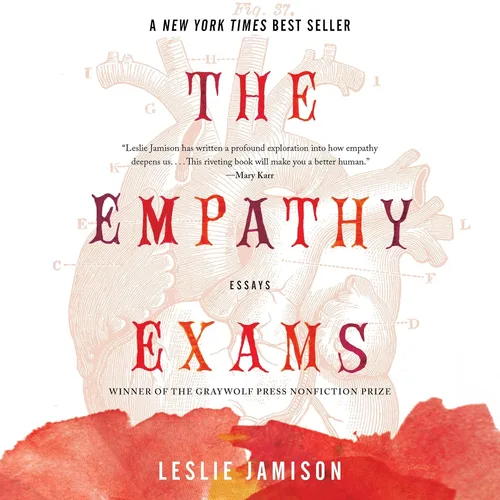
That night, I picked up Leslie Jamison’s The Empathy Exams. I had read about it before — a collection of essays on pain, illness, and the strange business of trying to understand someone else’s suffering. Jamison spent time as a “standardized patient” in medical school, faking symptoms for students to diagnose. She knows the performance of care. But the book asks something harder: can we ever truly feel what another person feels? And if we can’t, what is the point of trying?
Sitting in Someone Else’s Skin
Jamison opens with her own body. She describes the bruises from a heart surgery, the scars she still touches. She writes about a trip to a medical conference where people gather to share stories of pain. There is a woman who talks about her chronic migraines, a man who describes losing his wife. Jamison listens. She tries to imagine their lives. But she admits, quietly, that she cannot.
This is the book’s central tension. She wants to feel with others. She has a job that depends on pretending to feel — as a standardized patient, she mimics sadness, anxiety, relief. But the pretending is also real. She feels the weight of those simulated emotions. She calls it “empathy” and then she questions it. Is it empathy, or just a well-rehearsed script? Is it possible to care too much? To care in the wrong way?
I found myself stopping at certain paragraphs. She describes a friend who was raped, and how she tried to be present. She writes: “I wanted to be a good listener, but I kept wanting to fix it.” I recognized that impulse. The need to solve, to offer a solution, to make the pain go away. But pain doesn’t go away. It just sits there, like me on my friend’s couch, holding a cold mug of tea.
What We Miss When We Try to See
Jamison’s writing is sharp but never cold. She has a surgeon’s eye for detail. She notices the small things: how a patient’s hand trembles, how a student’s voice cracks when they say the wrong diagnosis. These details are not decorative. They are the point.
The core theme of the book, I think, is about the gap between intention and impact. We mean well. We want to help. But our attempts to understand can feel clumsy, even invasive. Jamison talks about a woman who says “I know how you feel” to a grieving mother. The mother flinches. The woman meant kindness. The mother heard emptiness.
There is a subtle light in these pages. It comes from Jamison’s refusal to pretend she has answers. She doesn’t offer a solution to the problem of empathy. She just says: look at this. Look at how hard it is. She writes about her own failures — the times she spoke too much, the times she stayed silent too long. She does not excuse herself. She just observes.
I think about that a lot. The way we want to be seen, but also the way we flinch when someone looks too close. Jamison names that contradiction. She doesn’t resolve it. She lets it breathe.
The Gift of Not Knowing
This book is not a guide. It will not teach you how to comfort a friend. But it will make you feel less alone in your fumbling. Jamison writes about a concept she calls “the wound of knowing” — the idea that understanding someone’s pain also means carrying a piece of it. That is heavy. It is also, in some strange way, a relief.
The book has flaws. Some essays drift longer than they need to. There is a piece about a trip to a gold mine that feels disconnected from the rest. I skimmed a few pages. But the best essays — the one about her own illness, the one about watching a documentary on suffering — they stay with you. They lodge in your chest.
I finished the book and texted my friend. I said: “I don’t know what to say. But I’m here.” She replied with a thumbs-up. It wasn’t a perfect moment. But it was honest.
Jamison gives us a golden quote near the end:
“The truest empathy is not the ability to feel what someone else feels. It is the willingness to sit with the fact that you cannot.”
