I was sitting in my car outside a grocery store when I got the call. My father was gone. Just like that. One Tuesday afternoon, nothing special about it, and then the whole world felt different. I remember thinking: how can a single day hold so much weight?
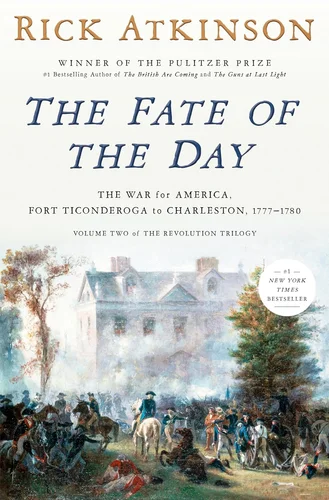
The Fate of the Day asks a version of that question, but on a much bigger scale. It looks at pivotal moments in history, the kind that get carved into textbooks. But here is the thing. The author does not treat those days as grand, inevitable events. She treats them as messy, human, almost accidental. And that made me wonder: is there really a difference between the day my father died and the day a war started? Or are we all just walking around, waiting for the ground to shift under our feet?
The Protagonist is the Day Itself
There is no single hero here. The protagonist is the day. Each chapter focuses on a different historical turning point. A battle. A decision. A sunrise that saw something horrible begin. The author gives us vivid portraits of people in those moments. A general who cannot sleep. A clerk who files the wrong paper. A mother who hears a strange noise outside.
You feel the weight of their choices. The suspense is real, even though you know the outcome. I found myself holding my breath during a scene about a single telegraph message. A message that, if delayed by ten minutes, might have changed everything. The author never reveals the ending in a cheap way. She lets the tension build, knowing we already know what happens. It is a strange magic trick.
But here is the deeper layer. The book is not really about history. It is about how we remember. How we assign meaning to random hours. The day itself does not know it is important. Only we do.
The Core Theme: Fragility and the Weight of Hours
The core theme is fragility. The idea that everything we build, every empire, every family, every quiet afternoon, is held together by a thread of chance. The author uses one image again and again: the breaking of a thread. A seamstress in one chapter, a rope in another, a spiderweb in a third. It is subtle. I almost missed it. But once I saw it, I could not unsee it.
The key imagery is light and shadow. Not in a poetic, abstract way. More like a photographer tracking the sun. The author describes how the light falls on a battlefield, how shadows creep across a map room, how a candle flickers before a signature. It sounds like a small detail. It is not. It is the whole point. The day is just a span of light. What we do in that light, that is the story.
I realized something reading this. My father’s day, the day he left, was also just a span of light. I have given it meaning. I have made it heavy. The book helped me see that maybe that is what we all do. We take ordinary hours and turn them into monuments.
What This Book Gives You
This book is for people who think about time. Who have ever looked at a calendar and felt the weight of a date. It is not a traditional history. There are no grand theories or sweeping conclusions. Instead, it gives you small, human moments. A soldier writing a letter. A diplomat spilling coffee on a treaty. A child asking a question no one can answer.
The author’s most important concept is this: history does not happen to faceless masses. It happens to people who wake up, eat breakfast, and have no idea their world is about to end. That is the gift of this book. It makes the past feel like the present. It makes you feel like you are standing in that room, watching the thread break.
Is there a weakness? Honestly, yes. The book can feel scattered. The chapters jump across centuries and continents. Sometimes I wanted to stay in one moment longer. But maybe that is the point. Maybe the author is showing us that we cannot hold on to any day for long. They slip away. Just like my Tuesday afternoon slipped away.
I finished the book on a Thursday. An ordinary Thursday. Nothing special happened. But I could not stop thinking about the thread. The light. The weight of hours. Maybe that is what a great history book does. It makes you look at your own ordinary days and wonder: is this the one? Is this the day I will remember forever?
Maybe. Maybe not. But you will still carry it with you. The question is: what will you do with the light you have?
