Some families grieve together. The Ryans grieve apart, which is a different thing entirely. Heather Aimee O’Neill writes a family the way weather writes a coastline, slowly, and then all at once.
The question this novel plants early and never stops asking is whether a family can hold a grief it never learned to speak out loud, or whether silence simply gets passed down like the house itself. That is not a rhetorical question here. It has a price, and by the last page I think you will feel you have paid part of it yourself.
What Actually Happens in This House
The Ryan sisters return to their childhood home on the eastern shore of Long Island for Thanksgiving. Cait flies in from London with her twins, newly divorced. Alice lives closest and carries the parents, the appointments, the roof repairs. Maggie arrives with a girlfriend and a knot in her stomach. Two decades earlier, a boating accident killed a friend’s brother, nearly ruined the Ryans financially, and pushed their brother Topher into a depression that ended with his suicide. Nobody in this family has ever carried that together. They carried it apart.
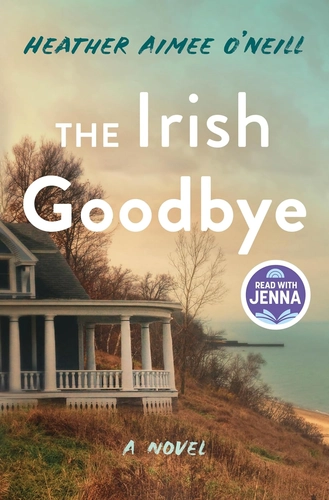
O’Neill moves between the three sisters’ points of view, and the plot is mostly a slow ignition of what they have each been hiding. Cait invites a guest to dinner. That guest matters. I will not say how.
The house itself does the work of a fourth narrator. The Folly, their old Victorian, has shingles curling at the corners and a porch that sags in a way Alice notices every single visit. The parents have aged in the way parents do, suddenly and then gradually, and nobody in the family has adjusted their internal picture. The house is failing at the exact rate the family is failing to talk.
Cait is the sister I understood least and thought about most. She left. She built a life elsewhere and calls that survival. Alice stayed and calls her own version survival too, and neither of them is wrong, and that is the argument the book is having under the argument.
The Guest Nobody Invited, and Everybody Did
The central image I keep returning to is a place setting. An extra chair at a holiday table, added out of politeness or hope or plain stubbornness, and the way the whole room reorganizes around it. O’Neill uses that chair like a lever. It forces the family to decide, in real time, who counts as theirs.
This is where the novel’s real subject surfaces. Forgiveness in this book is not a feeling that arrives. It is a decision made by tired people who are not sure they mean it yet. Nora, the mother, raised in Ireland by nuns, believes love is quiet endurance and that protecting people means withholding things from them. Her daughters want to be known. That gap between two definitions of love is the engine of every fight in the house.
Alice frustrated me for a hundred pages. She gives and gives and calls it virtue, and O’Neill lets her sit in that for a while before the book turns a light on it. The turn worked on me.
Some chapters circle the same resentments twice, and a few secondary characters, especially the husbands, stay thin enough that I had to flip back to remember who was married to whom. A 288 page book can still afford one less lap around the same wound.
The Heaviest Inheritance
The heaviest inheritance in this family was never the house or the debt. It was the habit of protecting each other from the truth.
O’Neill earns that idea through accumulated detail rather than declaration. The dry turkey. The mother’s clipped approval of a casserole. A door note that gutted me, and I won’t spoil which one. The book understands that Catholic guilt and Irish stoicism are not quirks here, they are load-bearing walls, and when the daughters start knocking on them, the whole structure creaks.
What I did not expect was how much the novel has to say about siblings specifically. Friends can walk away from you. Sisters cannot, which is both the curse and the gift on every page. The bickering is affectionate and precise, the kind that only comes from people who learned to fight before they learned to talk.
The resolution arrives a little fast for the amount of damage accumulated, and one confession in particular lands with less fallout than I expected. Still, that softness may be the point. O’Neill writes mercy the way most writers write tension, and I found myself grateful for it even while I doubted it.
The Irish Goodbye won’t teach you how to fix your family. It will make you slightly less certain that you already know what your family is hiding from you. Which is a stranger and better gift.
Somewhere tonight a mother is setting one extra plate and not saying why. This book is for her, and for whoever has to sit down across from her.

