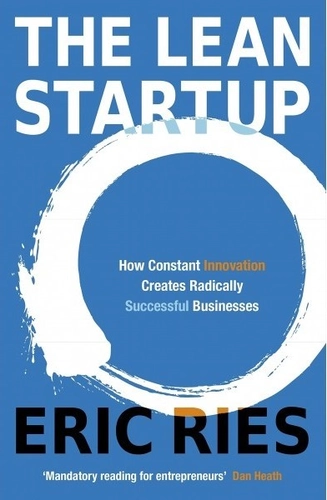
I picked up Eric Ries’s The Lean Startup on a Tuesday night, feeling smug. I had just finished drafting a forty-page business plan for an app idea I was certain would change how people book dog walkers. The spreadsheet was color-coded. The projections were conservative, even. I was ready to pitch. Then I read the first chapter, and my perfectly organized plan started to feel less like a roadmap and more like a very elaborate fantasy.
Ries’s central argument is almost insulting in its simplicity: most startups fail not because they build the wrong thing, but because they build the wrong thing beautifully, expensively, and with total confidence. He proposes a different path, one that treats entrepreneurship as a scientific discipline. The book’s thesis question is this, and I had to sit with it for a while: what if your job as a founder isn’t to have the vision, but to design the experiments that prove your vision wrong as quickly as possible?
The Gap Between Belief and Reality
The real protagonist of this book isn’t a person. It’s the gap between what you believe and what your customers actually do. Ries uses his own story from IMVU, where his team spent months building a sophisticated product, only to discover that customers wanted something far simpler and weirder than they imagined. Their initial avatar chat product was technically impressive. It was also completely wrong for the market. The team’s salvation came from a humiliating realization: they had to strip the product down to almost nothing and test each assumption one painful piece at a time.
This is where the book gets uncomfortable. Ries isn’t asking you to be brave. He’s asking you to be humble. The Minimum Viable Product, his most famous concept, isn’t about shipping garbage. It’s about shipping the smallest thing that lets you test your riskiest assumption. I remember reading the story of a food startup that manually prepared and delivered a single customer’s order by hand for weeks, just to test whether anyone would even want the service. No automated system. No app. Just a person, a phone call, and a lot of faith in the process. It was undignified. It was also brilliant.
The suspense in this book isn’t about whether the startup wins. It’s about whether you, the reader, can handle the idea that your brilliant idea is probably wrong, and that your job is to find out how wrong, not to defend it. The conflict is internal. I found myself arguing with the book, then realizing I was arguing because it was right.
The Small Batch That Changes Everything
Ries’s most powerful metaphor comes from Toyota’s production system, and it’s the image that anchors the entire book for me: the small batch. When stuffing newsletters into envelopes, most people fold all one hundred letters first, then seal all one hundred, then stamp all one hundred. Seems efficient. It isn’t. The person who stuffs one envelope completely, then moves to the next, finishes faster because they discover problems immediately. A defective envelope is found when it’s one envelope, not ninety-nine.
This image of the small batch is the book’s beating heart. It applies to code, to marketing campaigns, to entire business models. Ries argues that working in small batches isn’t just faster—it’s morally better. It stops you from wasting months of human effort on something nobody wants. The andon cord, which allows any Toyota worker to stop the entire production line the moment they see a problem, becomes a radical act of honesty. The book’s craft lies in this relentless focus on the feedback loop: build, measure, learn. Each cycle is an experiment. Each experiment is a chance to be less wrong.
What struck me most was how Ries redefines failure. It isn’t the opposite of success. It’s the raw material of it. He calls it validated learning, and the phrase initially felt like corporate jargon to me. Then I understood. Learning isn’t validated because you felt like you learned something. It’s validated because you changed your behavior based on evidence. The book is full of this kind of quiet recalibration. It doesn’t celebrate failure. It makes failure useful.
The Mirror I Didn’t Want to Look Into
Here’s the uncomfortable truth. This book is not for the founder who wants inspiration. It’s for the founder who wants to stop lying to themselves. Ries’s methodology forces you to confront your vanity metrics—the numbers that make you feel good but mean nothing. Total downloads. Page views. Likes. These are the modern equivalent of stuffing one hundred envelopes. They feel productive. They are not.
I once spent six months building a product feature that I was sure customers wanted. I designed it, built it, and launched it. Nobody used it. Nobody asked for it. When I looked at the data, the feature was actively making things worse. I had wasted half a year because I never once asked the question Ries insists on: what is the riskiest assumption here, and how do I test it in the smallest possible way? My assumption was that customers wanted the feature. I never tested that. I just built it. The book is a mirror, and I didn’t like what I saw in it.
But here is where the book also shows its limits. Ries’s examples are overwhelmingly from software and consumer internet. He acknowledges this bias, but it remains a real weakness. If you’re in a heavily regulated industry, or you’re building physical infrastructure, or you’re in healthcare, the speed of the build-measure-learn loop is not always possible. You cannot ship a half-finished pacemaker to test customer reaction. The methodology is brilliant, but it is not universally applicable without significant adaptation. Some readers will find this frustrating. I found it refreshing, actually. The book doesn’t pretend to have all the answers, which is oddly consistent with its own philosophy.
Permission to Stop Pretending
Anyone about to start a company should read this. Anyone who works in a large organization that keeps launching products that die quietly in the market should read this. Anyone who has ever planned something for months, convinced they knew what was best, only to discover they were completely out of touch with reality should read this. If you’re looking for a passionate manifesto about the power of vision, if you want to be told that your idea is brilliant and you just need to believe in it harder, stay away. This book will tell you that your idea is a hypothesis, and hypotheses are meant to be tested, not worshipped.
What I gained from this book is not a set of tactics, though the tactics are genuinely useful. I gained permission to stop pretending. Permission to admit that I don’t know what customers want, and that the fastest way to find out is to stop guessing and start testing. The book’s final gift is the question Ries leaves you with, and it has haunted me since I read it: if we stopped wasting people’s time, what would they do with it? We have no real concept of what is possible.
That’s the true thesis of this book. It’s not just about building better companies. It’s about building a world where the staggering amount of human effort currently wasted on building things nobody wants is redirected toward the things that actually matter. And that, I think, is a vision worth testing.

