I went to a family dinner recently. Two relatives got into a fight about politics. Nothing new there. But I watched them both become different people. Their faces changed. Their voices hardened. They were no longer uncle and nephew. They were us and them. I felt something cold settle in my stomach. Later that night I picked up Lawrence Wright’s The Looming Tower. I had heard it was a masterpiece of investigative journalism. I expected facts about Al-Qaeda and 9/11. What I did not expect was a book that quietly asks: how do ordinary people become enemies?
Wright does something strange with this book. He tells the story of Osama bin Laden and Ayman al-Zawahiri. But he does not paint them as monsters from the start. He shows them as men. Men who were shaped by their histories. Their humiliations. Their desire for meaning. Zawahiri was a shy Egyptian doctor. He was tortured in prison. The experience broke something in him. Bin Laden was a wealthy Saudi. He was awkward and shy. He found purpose in a cause. I found myself almost understanding them. That is the unsettling part. Wright makes you see how ordinary grievances can twist into something terrible. The book does not excuse them. It explains them. And explanation feels dangerous. Because it reveals that the line between us and them is thinner than we want to believe.
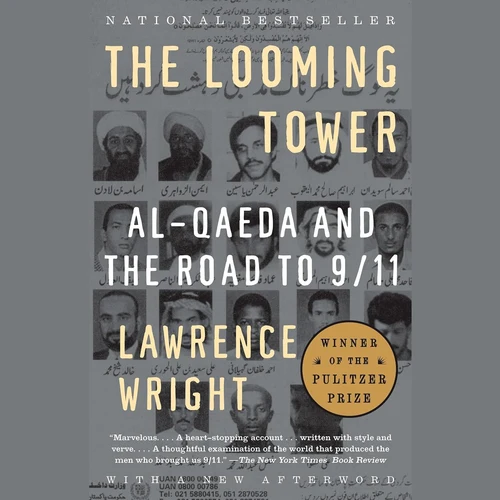
Wright’s central question is this: what happens when we stop seeing the other person as human? He tracks this through two key images. The first is the tower itself. A structure that reaches up. A symbol of power and visibility. The second is the loom. A device that weaves threads into something stronger. Wright shows how ideology weaves small resentments into a grand narrative. A village grievance becomes a national wound. A personal failure becomes a civilizational insult. The imagery stays with you. Every time I see a tall building now I think about what it takes to bring it down. Not the explosives. The stories we tell ourselves first. Wright’s craft is patient. He lets the details accumulate. He does not shout his argument. He weaves it.
So what do we do with this knowledge? I am still figuring that out. The book gives no easy answers. It does not say “love your enemy” or “understand everyone.” That is too simple. Wright shows that understanding can coexist with condemnation. You can see how someone became who they are and still hold them accountable. The book’s cross-era resonance is obvious. We live in a time of constant us-versus-them narratives. Social media. Politics. Even our families. The Looming Tower is not a self-help book. It is a mirror. It asks me to look at the small ways I build my own towers. The people I dismiss. The stories I tell about them. The core insight: every enemy is someone’s hero. Every monster was once a child with a wound. That does not erase what they did. But it does make the world more complicated. And maybe that complication is the only thing that can save us.
