I was at a dinner party recently. Someone asked, “What makes a great leader?” People threw out words: charisma, vision, strength. I sat there, thinking about Theodore H. White’s book. Because I’m not sure those words mean anything. I’m not sure leadership is a thing you have. Maybe it’s a thing you build. But how? How do you build something as invisible as belief?
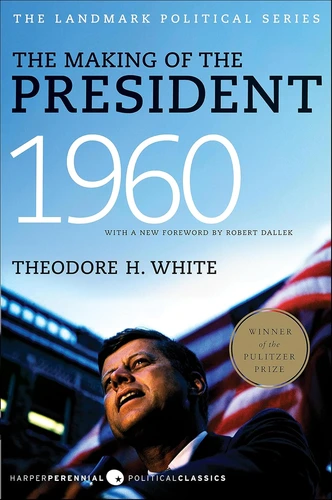
What White Did That No One Had Done Before
White walked into the 1960 campaign and decided he wouldn’t write about politics the way everyone else did. He wouldn’t write about policies or speeches. He would write about people. Specifically, he would write about the people around John F. Kennedy and Richard Nixon. The ones who made the phones ring. The ones who argued in hotel rooms at 2 AM.
The book reads like a novel, honestly. There is a protagonist. There is a conflict. There is a climax. White knew that campaigns are stories. And the candidate who tells the best story wins.
Here is the thing I keep thinking about. Kennedy’s team was small. It was messy. They made mistakes constantly. But they had this thing—this belief that they could win. And that belief spread. It spread to volunteers. It spread to donors. It spread to voters. White shows you how that happened. Not through magic. Through phone calls. Through handshakes. Through someone staying up all night to fix a typo on a flyer.
I’ll be honest. I did not expect to care this much about a book from 1961 about a campaign I wasn’t alive for. But White understands something. He understands that a campaign is not about the candidate. It is about the people who carry the candidate’s story to the world.
The Real Question the Book Asks
The question White is really asking is this: What makes people believe in something that hasn’t happened yet?
He shows you Kennedy’s team in the early days. They were behind. Everyone said they would lose. But they kept going. Why? White’s answer is subtle. He doesn’t say they were brave. He doesn’t say they were smart. He says they were organized. They had a plan. They executed the plan. And one day, the plan started working.
The imagery in the book is quiet. White doesn’t use big metaphors. He uses small details. A handshake that lasts a second too long. A hotel room filled with cigarette smoke. A phone ringing at 3 AM. These are the building blocks of a story. And White knows that stories are what win elections.
I realized something reading this book. We talk about leaders like they are born. Like they have some magic quality. But White shows us that leadership is a construction project. It is built by people. It is built in rooms we never see. It is built at 3 AM when no one is watching.
What This Book Means Now
I think about my own life. The projects I gave up on. The times I told myself something was impossible. This book makes me wonder. What if I had kept going? What if I had found the right people? What if I had built the story instead of waiting for it to appear?
White’s book is not really about politics. It is about the human capacity to believe. To build. To make something out of nothing.
There is a moment in the book where White describes Kennedy’s team on election night. They are exhausted. They have done everything they can. And now they wait. White writes, “They had made a story, and now the story would tell itself.”
That is the line I keep coming back to. Because it is true. In politics. In business. In life. You build the story. You tell it to everyone who will listen. And then, one day, the story starts telling itself.
What story are you building right now?
