I recently heard a friend recall a choice she made after college — she had a job offer in another city but stayed in her hometown. After graduating from college, she had a job offer in another city but ended up staying in her hometown for various reasons. She laughed and said she was happy with her life now, yet she still sometimes wonders how things would have turned out if she’d made a different choice.
I felt a pang of recognition at her words. Many of us look back and wonder about the lives we didn’t live. This universal sense of regret is exactly what The Midnight Library explores.
The story follows Nora Seed, who stumbles upon a mysterious library between life and death when she hits rock bottom. Shelved inside are countless books, each representing a different version of her life. Open any one, and she steps into an alternate reality, living out the outcomes of every choice she could have made. In these lives, she becomes an Olympic champion, a renowned musician, a polar scientist, and even someone who never lost the love of her life.
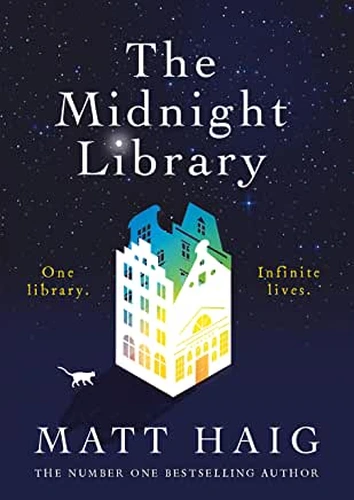
On the surface, this is a tale of parallel universes. Nora’s lingering disappointment in each new world captivated me most, not her alternate lives.
At first, I shared Nora’s belief that a “better life” must exist. I used to think life would be far more fulfilling if I had worked harder, held back a careless word, or seized a missed chance. But as the story unfolds, I realized the author is not really talking about choices — but our fantasies about regret. More often than not, we do not long for another life itself, but for the perfect, idealized version we paint in our minds.
One line in the book stayed with me for a long time:
“You don’t have to understand life. You just have to live it.”
At first glance, it seemed overly simple, but its meaning sank in gradually. Humans crave certainty; we want to know in advance which path is best and which decision is right. Life rarely works that way. Whichever road we take, we gain some things and inevitably lose others.
A particular detail left a deep impression on me. Nora always regretted quitting swimming as a young woman, convinced she could have become a champion if she had kept it up. Watching Nora navigate her alternate lives reminded me of my own choices and their unseen consequences. But when she finally lives that life, she finds success does not bring lasting contentment. She has medals, fame and applause, yet loses many cherished relationships along the way. In that moment, it dawned on me: we are quick to envy the lives we could have had, yet we rarely see the sacrifices hidden behind them.
This made me reflect on my own college years. I considered studying abroad, but practical circumstances changed my mind. For a long time, I wondered what my life would be like overseas. Later, I befriended people who had lived abroad for years. Hearing their struggles, I realized every life has hidden hardships. We tend to romanticize what we do not have, and take what we already for granted.
The Midnight Library resonates with so many readers largely because it taps into the common emotion of regret. Critics say the book is about “what if” thinking, not parallel universes. Nora’s journey through endless alternate lives is not about finding a perfect solution. It leads her to a quiet realization: perfection does not exist at all.
The book’s alternate lives feel like fables, and its characters are a bit straightforward. Readers looking for dense, layered literary fiction may find its themes somewhat obvious. That said, its simplicity is also its greatest strength. The author uses a simple story to help us re-examine regret, not abstract philosophy.
After finishing the book, what stuck with me was the image of Nora picking up book after book. We will never truly know if another life would have been better, and many questions in life have no final answers. As I grow older, I have come to see that it is rarely our past choices that hold us back — but our tendency to keep looking back.
If such a midnight library really existed, the most important book would be the one we are writing in this moment. It would be the page we are writing, right here and now.
