I was scrolling through a dating app the other night, swiping left on a dozen faces in under a minute. My thumb moved faster than my brain. Later, I wondered: what algorithm decided which faces appeared first? Who trained that algorithm to prefer certain skin tones, certain jawlines, certain waist-to-hip ratios?
That is the question Laura Bates drops in our laps with The New Age of Sexism: How AI and Emerging Technologies Are Reinventing Misogyny. Not “is technology sexist?” but “how quietly does it learn to be?”
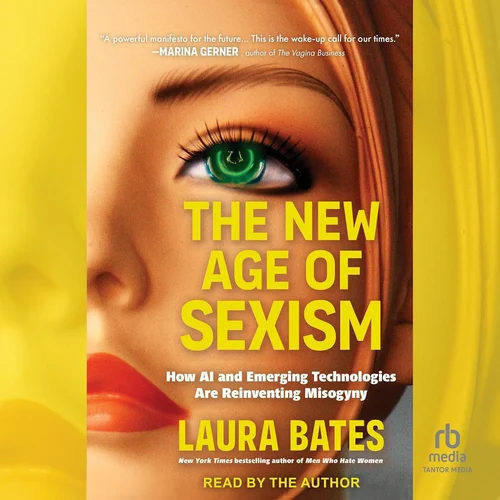
Character and Plot: The Ghost in the Machine
Bates does not write a protagonist in the traditional sense. Her protagonist is us. Women, specifically. She builds a portrait of a world where biases no longer require human voices to spread. Instead, they live inside hiring algorithms that penalize female names. They lurk in facial recognition software that fails to read darker skin. They hide inside social media platforms that amplify thin bodies and punish aging ones.
The book’s core conflict is deeply unsettling. It is not that bad actors are programming misogyny into machines. It is that machines absorb our existing biases, then amplify them at scale. A hiring AI trained on ten years of company data learns that men get promoted more often. So it recommends male candidates. No one told it to be sexist. It just watched us and learned.
I found myself squirming on page after page. Bates documents how AI-powered “nudify” apps allow users to strip clothing from photos of real women without consent. How deepfake pornography targets journalists, activists, ordinary teenagers. How voice assistants with female names endure verbal abuse from users, then apologize for it. The violence is no longer physical. It is algorithmic.
The plot, such as it is, follows Bates’s investigation across industries. She interviews engineers, ethicists, victims. She visits Silicon Valley campuses and London courtrooms. The suspense never comes from a single event. It comes from the slow, chilling realization that this machine is already running. It has been running for years.
Theme and Imagery: The Mirror We Never Clean
The core theme here is invisibility. Bates argues that technological sexism is more dangerous than traditional misogyny precisely because it is harder to see. A boss who says “women don’t belong in engineering” gets fired. A recruitment algorithm that filters out women runs for years without anyone noticing.
The key imagery that stayed with me is Bates’s description of AI as a mirror. Not a clean mirror, but one smudged with our own fingerprints. We look into it expecting to see ourselves. Instead, we see the worst version of what we have already become. The machine reflects our biases back at us, but sharper. More efficient. More relentless.
She unpacks this beautifully in a chapter on social media algorithms. These systems learn that female users who post content about weight loss or cosmetic procedures generate more engagement. So they surface more of that content. They optimize for insecurity. The machine does not hate women. It simply learned that making women feel bad about themselves keeps them clicking.
The universal pattern Bates reveals is this: every new technology inherits the prejudices of its creators, then amplifies them. We think each generation gets more enlightened. But the machines remember what we forget. They preserve our worst instincts in code.
Elevation and Call to Action: What We Choose to See
Completing the argument, Bates does not offer easy solutions. She does not say “ban AI” or “fire all male engineers.” That would be too simple, and she is too honest for that. Instead, she calls for transparency. For audits. For diverse teams building the systems that will shape our lives.
I thought about this book while reading news about an AI hiring tool that systematically downgraded resumes from women’s colleges. The company said they were “surprised.” They had not programmed it to be sexist. But they had trained it on their own hiring data. The machine simply learned what they had already done.
The book is not perfect. Bates sometimes piles on examples where one would suffice. She leans heavily on anecdotal evidence when I wanted harder data. And I wished she spent more time on solutions that actually scale. But these are small complaints.
The real emotion this book left me with is not anger. It is a quiet, sharp-edged grief. We built these systems hoping they would be better than us. More fair. More just. Instead, they are learning our worst habits, faster than we can recognize them.
I will be honest: I deleted the dating app. Not because of anything Bates wrote specifically about dating. But because I could no longer pretend the algorithm was neutral. It was watching me. Learning from me. Repeating me back to myself.
Maybe that is the real horror. Not that machines have learned to hate women. But that they have learned to be us.
