I went to a cousin’s wedding recently. The groom’s father stood up to give a toast. He rambled for seven minutes. Everyone smiled politely, but the room went quiet only when he said: “Love is not about big gestures. It is about showing up Tuesday.”
That moment stuck with me. Because it reminded me of a book I had been avoiding. A book about a speech everyone knows. A speech with only 272 words. Garry Wills’s “Lincoln at Gettysburg: The Words That Remade America” won the Pulitzer in 1993. I started it twice, put it down twice. I thought I knew the Gettysburg Address. Why read a whole book about it?
I was wrong. The question that began haunting me was this: How does a short speech change a nation when long ones have failed?
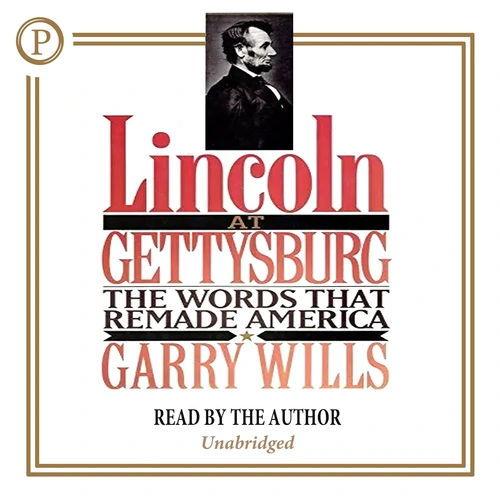
The Man Who Spoke for a Fractured People
Abraham Lincoln stands at Gettysburg in November 1863. The battlefield is still fresh. The smell of blood and gunpowder, I imagine, lingered in the cold air. Edward Everett had spoken for two hours before Lincoln. Historians say Everett’s speech was polished, learned, full of classical references. It was forgotten within a week.
Lincoln delivers 272 words. Ten sentences. The audience applauds politely, but the newspapers mock it. A local paper wrote that the president “cheekily” offered a few remarks. No one thought it was important. Not then.
What makes this portrait so vivid for me is not Lincoln’s genius. It is his vulnerability. He is not certain. He is not grandstanding. He is a man trying to find words for something that words could not carry. The dead are gone. The war is not won. The nation is bleeding. And he has only a few sentences to hold it together.
Wills shows us a Lincoln who understands that brevity is not weakness. It is the only honest response to enormity. When you cannot explain everything, you choose one thing. And you say it so clearly that it becomes the truth.
I will not spoil the ending. But I will tell you: the core conflict is not between North and South. It is between the old America and the new one. Between the idea that the nation is a contract and the idea that it is a promise.
The Weaver of a New Nation
The core theme of this book is simple and devastating: Lincoln did not just give a speech. He changed the meaning of America.
Wills argues that before Gettysburg, the Constitution said “the United States are.” After Gettysburg, Americans started saying “the United States is.” A single verb shift. From plural to singular. From a collection of states to one nation. Lincoln did not argue for this change. He performed it.
The key imagery in the book is the “rebirth” of a nation. Lincoln says the dead “gave their lives that that nation might live.” He does not say they fought for the Constitution. He does not say they fought for their states. He says they fought for the nation itself. And because they died, the nation must be born again.
Wills traces this idea to Greek funeral orations, to the Bible, to the Declaration of Independence. Lincoln borrowed from all of them. But he did something his sources never did. He made the nation not a given but an aspiration. Something to be achieved. Something that could fail.
This character, Lincoln, is not a hero in the traditional sense. He is a man who understood that words do not describe reality. They create it. And he used that understanding to pull a broken country toward a better version of itself.
What Wills does so well is show us the craft behind the speech. Lincoln revised it multiple times. He crossed out words. He changed the order. He knew that every syllable mattered. Because when you speak to a nation in crisis, you cannot afford to waste a single breath.
The Silence That Speaks
I finished this book on a Tuesday night. I sat in my living room, the book in my lap, and I felt something I had not expected. I felt hope. Not the naive kind. The kind that comes from understanding that change is possible with very few words.
Maybe that is what the book is really about. Not Lincoln. Not the Civil War. But the quiet power of saying exactly what needs to be said, and then stopping.
Wills shows us that the Gettysburg Address works because it leaves so much unsaid. Lincoln does not explain why the war happened. He does not blame anyone. He does not promise victory. He simply states a fact: these men died for a nation. And then he asks us to finish their work.
The real emotion here is not admiration for Lincoln. It is recognition. We all have moments when we need to say something that matters. A eulogy. A apology. A declaration. And we freeze. We think we need more words. We think we need to explain everything.
Lincoln teaches us the opposite. The most powerful words are the ones that leave room for silence. The ones that trust the listener to fill in the gaps.
I will not say everyone should read this book. That would be a cliché. But I will say this: if you have ever struggled to find the right words, if you have ever felt that your voice was too small to change anything, read it. You might discover that 272 words are more than enough.
