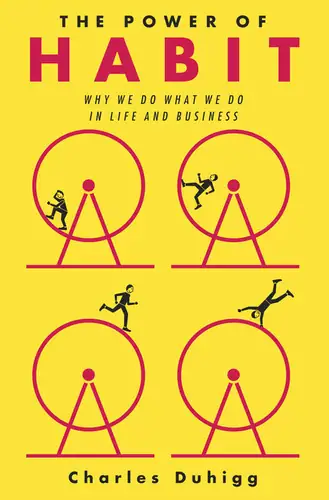
I picked up The Power of Habit on a Tuesday night, exhausted after another failed attempt to stop snacking after dinner. I was sitting on my couch, a half-eaten chocolate bar in my hand, feeling defeated. I had tried everything—willpower, apps, even hiding the sweets. Nothing worked. So I opened this book by Charles Duhigg, expecting more of the same advice. I was wrong.
The book opens with a story that stuck with me. A man with severe memory loss, Eugene, couldn’t remember his own wife’s name. But he could still find his way to the kitchen when he was hungry. His brain didn’t need memory, just a cue, a routine, a reward. That was my first shock. Habits aren’t about conscious decisions. They live in a different part of the brain, the basal ganglia. They are automated, almost robotic. Duhigg calls this the “habit loop.” A cue triggers a routine in anticipation of a reward. For the man with memory loss, hunger was the cue, walking to the kitchen was the routine, food was the reward. For me, boredom after dinner was the cue, eating chocolate was the routine, the fleeting pleasure was the reward. The loop was the same.
The Problem with Almost Every Self-Help Book
Most books tell you to just try harder. Duhigg doesn’t. He argues you can’t kill a bad habit. You can only replace the routine. The cue and the reward must stay. You have to keep the craving alive, but give it a new path. He uses the story of Tony Dungy, the football coach. Dungy took a losing team and turned them into champions. He didn’t change the players. He changed their automatic responses on the field. Instead of overthinking during a play, they drilled a simpler routine until it became instinct. The cue was the snap, the reward was a win. The new routine was a simpler, faster reaction. This is the golden rule. It felt like a cheat code. I didn’t need to hate my craving for chocolate. I just needed to redirect it to something less destructive, like an apple. Honestly, it worked for about three weeks. Then I failed. But I failed differently.
A Strange Comfort in the Failure
The book gets dark in the middle chapters, and I appreciated that. Duhigg writes about institutional habits, how companies like Alcoa transformed by focusing on one “keystone habit,” safety. He talks about how Starbucks trains employees to handle angry customers by giving them a script, the LATTE method. Listen, Acknowledge, Take action, Thank, Explain. This is not about being nice. It is about replacing a panic routine with a calm one. But the most uncomfortable part was about gambling. Scientists scanned the brains of pathological gamblers. They discovered that a near-miss activates the same reward centers as a win. The gambler’s brain is literally tricked into feeling successful even when losing. I recognized this in my own life. The near-miss of almost sticking to a diet felt like a win. The feeling of almost achieving a goal was enough to keep me trying and failing. The craving was not for the chocolate. It was for the feeling of being in control. The reward was the illusion of control.
Is This Book for You?
This book is not a miracle cure. It is a manual for understanding your own machinery. It is for people who are tired of blaming themselves for their bad habits. It is for anyone who has tried to change and felt like a failure. But I have a warning. The book has a flaw. It is too optimistic. Duhigg ends by saying any habit can be changed. I don’t know if I believe that. Some loops feel too deep, like the one that makes you reach for your phone when you feel lonely. The book is also very long, and the business chapters can drag. If you want a quick, magical fix, this will disappoint you.
What I Took Away
This book won’t make you perfect. It will make you slightly less confused about why you do what you do. It gave me a new question to ask myself when I fail. Instead of asking “Why am I so weak?” I now ask “What is the cue? What is the real reward?” The answer is often not chocolate or a cigarette. It is a feeling. A feeling of relief, of connection, of escape. The book’s real gift is that it turns your worst moments into a puzzle instead of a shame. And that, honestly, is a pretty good place to start.
