Have you ever been in a room with someone you once knew completely, and found that you could not reach them? Not because of distance or anger. More like a language you both forgot. I have been thinking about that feeling a lot lately, especially after reading Jesselyn Cook’s The Quiet Damage: QAnon and the Destruction of the American Family. The book is not really about conspiracy theories. It is about what happens when love itself becomes a battlefield. And the question it forces is this: when the person you love most becomes a stranger, do you fight for them or do you let go?
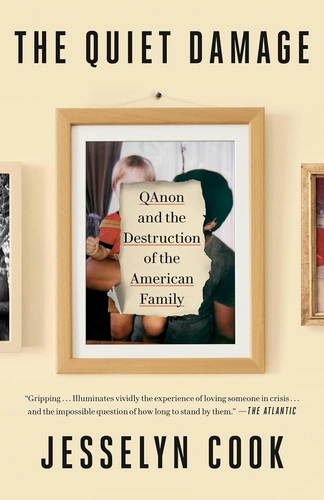
The book follows five American families, each fractured by a loved one’s slide into QAnon. One husband, a gentle man who once cried at his daughter’s wedding, starts sending her texts about cabals and child trafficking. A mother, once the family’s emotional anchor, begins to believe the world is run by a secret elite. Cook does not caricature these people. She sits with them, listens to the absurdity and the ache. I found myself feeling something I did not expect: pity. Not for the conspiracy believers exactly. For the people left behind, the ones who still love the person who disappeared. The core conflict is not about facts. It is about grief. You watch a wife try to argue her husband back to sanity, and you realize she is not arguing. She is mourning. The author never reveals how each story ends, which is honest. Because for many, there is no ending. There is just a slow, painful silence.
The core theme here is something Cook calls “the quiet damage.” It is not the loud fights or the screaming matches. It is the small, daily erosion of trust. A child stops talking to their father. A couple stops eating dinner together. The key imagery is silence itself. Cook describes a kitchen table where no one speaks anymore, a living room where the TV is always on but no one watches it. She writes about the way a person’s eyes go blank when you try to explain something simple. That is the damage. It is not that you lose the argument. It is that you lose the ability to even have one. What the book reveals is a universal pattern. It is not about politics, exactly. It is about the human need to belong somewhere, even if that somewhere is a lie. The struggle of these characters shows that the opposite of love is not hate. It is the moment when you stop trying to understand each other.
So what do we do with this? The book does not offer easy answers. It does not say “talk to them” or “cut them off” because both feel wrong. What it offers is a kind of witness. It says: this is happening. And it is not just about QAnon. It is about any belief system that replaces a person’s real life with a story. A friend of mine once told me her father had become a stranger after he found a new religion. She said, “I miss him. But I don’t know who he is anymore.” That is the quiet damage Cook is writing about. The book is for anyone who has lost someone to something they cannot fight with logic. It is for people who understand that love alone is not enough. What you get from reading it is not a solution. You get company. You get the knowledge that you are not alone in that empty kitchen.
Maybe that is the golden quote, from one of the wives in the book: “I used to think love could fix anything. Now I think love is just the thing that makes you stay when you want to run.”
