The Hollow Feeling That Led Me Here
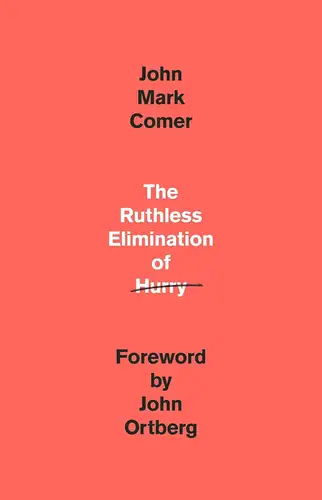
I was scrolling my phone the other night, half-watching a show I didn’t care about, half-listening to my wife tell me about her day. And I felt it. That hollow, stretched-thin feeling. Like I was everywhere and nowhere at once. That’s when I picked up John Mark Comer’s book. The question on the first page hit me hard: “Who am I becoming?”
Comer doesn’t start with a sermon. He starts with his own confession. A pastor who was successful on the outside but crumbling inside. Exhausted, anxious, spiritually dry. A mentor told him one thing: “Ruthlessly eliminate hurry from your life. Hurry is the great enemy of the spiritual life.” I thought, okay, another productivity book dressed in religious clothes. But it isn’t. It’s something rarer. It’s a diagnosis of the soul.
The book argues that hurry isn’t just a bad habit. It’s a sin. A root sin that feeds others. Anger, lust, greed, envy. They all grow faster in rushed soil. Comer traces the history. How we went from agrarian rhythms to industrial schedules. From Sabbath rest to 24/7 availability. From deep relationships to shallow notifications. He takes us to Jesus, not as a theological figure, but as a man who moved slowly. Who never seemed rushed. Who had time for interruptions. Who slept through storms. The contrast is damning.
Four Practices, One Invitation
The heart of the book is four practices. Silence and solitude. Sabbath. Simplicity. Slowing. Each is a muscle we have to rebuild. Comer gives practical steps, but they aren’t checklists. They’re invitations. He talks about his own attempt to take a month off every summer. I laughed at that. Impossible, I thought. But he admits it’s hard. He admits he fails. That honesty is what makes you trust him.
Here’s where I struggled. Comer’s world is very urban, very West Coast progressive. His solutions assume a certain privilege. Not everyone can take a sabbatical. Not everyone can move to a slower job. He acknowledges this, but it’s still a tension. The book is best for people drowning in privilege, not for those barely surviving. Still, the core truth is universal. We all need less noise. We all need more presence.
What I took away wasn’t a to-do list. It was a permission slip. Permission to stop. To say no. To not reply to that email. To sit in silence and let my soul catch up. Comer calls it “the unhurried life of Jesus.” I don’t know if I’ll get there. But I know which direction I want to walk.
What the Book Does Well and Where It Stumbles
The book’s weakness is its theology. It’s firmly within an evangelical framework. If that’s not your world, some passages will feel alien. But the diagnosis of hurry as spiritual sickness transcends denomination. It’s a human problem. And Comer’s gentle, self-deprecating voice makes it feel like a friend guiding you, not a teacher lecturing you.
I finished the book and sat still for five minutes. No phone. No TV. Just me and the quiet. It felt strange. And wonderful. Maybe that’s enough. Maybe that’s the start.
