When Helping Your Child Starts to Feel Like Too Much
Many parents want their children to do well, so they naturally step in. They remind them about homework, manage schedules, solve problems, push them to keep trying, and worry when they seem unmotivated. The difficulty is that support can gradually turn into constant supervision, leaving both parent and child feeling stressed.
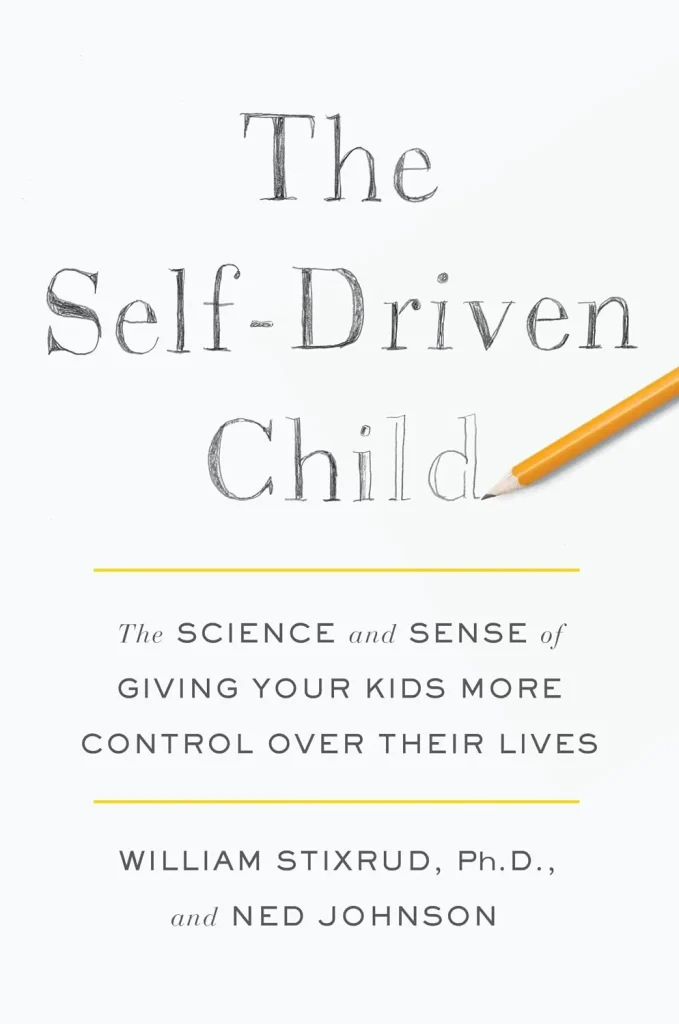
The Self-Driven Child by William Stixrud and Ned Johnson looks at this problem from a different angle. Instead of asking how parents can motivate children more effectively, the book asks whether children have enough control over their own lives to develop real motivation in the first place.
Stress Can Change How Children Behave
One of the book’s central ideas is that chronic stress can affect more than a child’s mood. When children are overwhelmed, they may become irritable, avoidant, distracted, resistant, or simply appear unmotivated.
That can be frustrating for parents because the obvious response is often to push harder. More reminders, more pressure, and more monitoring may seem like the answer, but they can also add to the stress that is already getting in the way.
The book encourages parents to look at the pressure surrounding a behavior instead of focusing only on the behavior itself.
Children Need Some Control Over Their Lives
The authors place a strong emphasis on autonomy. Children need opportunities to make decisions, experience consequences, and gradually take ownership of parts of their lives.
That does not mean parents stop setting rules or expectations. It means not turning every decision into something a parent manages for the child.
A child who has some control over how they solve a problem is more likely to develop the confidence to handle future problems independently. Parents are still there to guide them, but they are not expected to manage every step.
What About Motivation?
The book is especially interesting when it comes to motivation. Parents often worry when a child is not working hard enough, particularly at school, and the instinct is to add more pressure or rewards.
Stixrud and Johnson suggest that motivation works differently when children feel trusted and responsible for their own choices. A child who feels that every decision is being monitored may eventually stop feeling that the goal belongs to them.
This is particularly relevant for parents who find themselves asking the same things every day: “Did you finish your homework?” “Did you study?” “Why haven’t you started yet?”
Sometimes the bigger question is whether the child has any ownership of the process.
Parents Still Have to Be Parents
The book does not argue that children should simply be left alone. Younger children and teenagers still need structure, limits, guidance, and adults who step in when necessary.
The difference is that parents can gradually move from doing everything for their children toward helping them handle more things themselves. That shift can be uncomfortable because letting go means accepting that children will sometimes make mistakes.
But mistakes are also part of learning responsibility.
What Makes The Self-Driven Child Worth Reading?
The book feels particularly relevant for families dealing with school pressure, anxiety, overscheduling, or constant battles over motivation. Rather than giving parents another list of ways to push children toward better performance, it asks them to think about the environment they are creating around the child.
That makes it useful for parents who want their children to become capable and responsible without turning everyday life into a constant performance review.
Who Should Read It?
This book may be useful for parents who notice that their child:
- Seems constantly stressed or overwhelmed
- Has little motivation without repeated reminders
- Becomes anxious about school or performance
- Relies heavily on parents to solve problems
- Has difficulty making decisions independently
- Pushes back against constant parental involvement
Final Thoughts
The Self-Driven Child makes a simple point that can be surprisingly difficult for parents to follow: helping a child grow does not always mean doing more for them. Sometimes it means creating enough space for them to make decisions, experience mistakes, and gradually take ownership of their lives.
For parents dealing with stress, motivation problems, or constant battles over responsibility, the book offers a useful shift in perspective. The goal is not to raise a child who always does what they are told, but one who eventually knows how to manage their own life.

