It was a Tuesday night, around eleven. I had work the next morning. I told myself I would read one chapter. Just one. Three hours later, the book was finished and I was sitting in the dark, staring at nothing. The twist had hit me so hard I felt a little sick. Not because it was clever. Because it made me question everything I had just read. And everything I thought I knew about Alicia Berenson.
Here is what you know going in: Alicia, a successful painter, shoots her husband Gabriel five times in the face. Then she never speaks again. Theo Faber, a criminal psychotherapist, becomes obsessed with getting her to talk. That is the setup. But the real question the book asks is quieter, more uncomfortable. What if the silence is not a mystery to be solved, but a truth we are all too afraid to hear?
A Woman Who Became a Mirror
Alicia Berenson is not a character you feel sorry for. She is too distant for that. Too still. The novel gives us her diary entries, and in those pages she is warm, uncertain, deeply in love with her husband. But in the present, in the forensic unit called the Grove, she is almost a ghost. She sits. She paints. She does not speak.
Theo Faber is our narrator. He is determined, a little obsessive, with a troubled childhood he keeps trying to outrun. He believes he can save Alicia. He believes he understands her. I found myself rooting for him, even when I sensed something off. He tries so hard to be the good guy. Too hard, maybe.
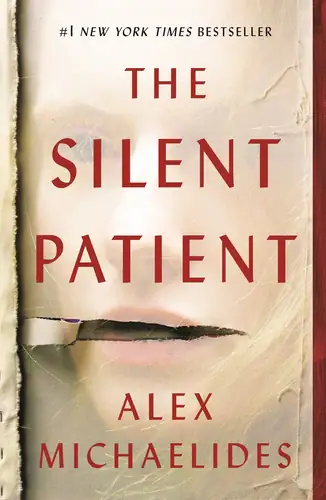
The suspense comes from watching Theo try to crack Alicia’s silence while the diary reveals a marriage that was not as perfect as it seemed. Gabriel was handsome and successful and loving. But there were cracks. A missed phone call. A strange woman at a party. A creeping sense that something was wrong. The question becomes not just why Alicia killed him, but whether she had reasons we cannot see.
I will not tell you the ending. The twist is famous for a reason. But I will say this: the moment it clicks, the entire book rearranges itself. You realize that nothing was what you thought. And that includes Theo.
The Cage We Build Around Ourselves
The core theme here is not murder. It is the stories we tell ourselves to survive. Alicia does not speak, and her silence becomes a screen. Everyone projects onto it. The media sees a monster. The doctors see a puzzle. Theo sees a patient he can fix. But silence is not emptiness. It is a kind of language too.
The key imagery of the novel is the painting Alicia creates after the murder. It is called “Alcestis,” after the Greek myth of a woman who died for her husband and was brought back from the dead, only to remain silent forever. The myth matters. In the story, Alcestis sees something in the underworld that she cannot speak of. Her silence is not refusal. It is protection.
I kept returning to that image. A woman who saw something so terrible that words became useless. The book does not tell us what Alicia saw. It makes us guess. And our guesses reveal more about us than about her. That is the uncomfortable trick of this novel. It holds up a mirror and asks what we are willing to believe about someone who cannot defend herself.
The Truth We Don’t Want to Hear
Here is my honest verdict on this book: The Silent Patient is not a thriller about a woman who stopped talking. It is a thriller about how easily we accept the version of a story that lets us sleep at night.
Theo is a good therapist. He is also a liar. He is also, maybe, a victim. The book plays with your sympathy in a way that feels almost cruel. You want to trust him. He wants to trust himself. But the ending forces you to ask: who gets to decide what the truth is? The person who tells the story, or the person who is trapped inside it?
This book will not give you a clean resolution. It will not make you feel safe. The final pages linger like a bruise. You might want to throw the book across the room. I did. Then I picked it up and read the last chapter again, because I could not believe what I had just witnessed.
If you love a twist that changes everything, read this. If you have ever wondered what it means to keep a secret so deep you cannot even admit it to yourself, read this. If you like to be unsettled, read this.
If you need your narrators to be reliable and your endings to be tidy, stay away. If you have experienced abuse and find that subject difficult, be careful. The book handles it with care, but it does not look away.
The insight I am still carrying: we are all silent patients, in some way. We all have rooms in our minds that we do not open. The difference is that most of us get to keep the door closed. Alicia could not. And what she found on the other side was something no one wanted to hear.
