I was at a startup office last month, watching a team of developers stare at a screen that had just gone blue. The deadline was in three days. The lead engineer, a woman in her thirties with tired eyes, said nothing. She just opened her laptop and started typing. Everyone else did the same.
I thought of Tracy Kidder’s book then. It came out in 1981, long before any of those developers were born. And yet, the scene felt like a perfect echo.
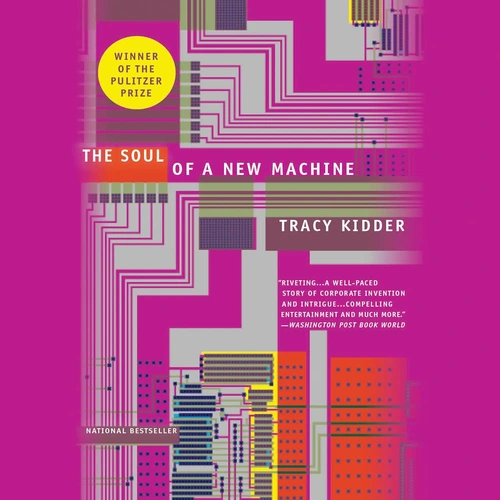
The Soul of a New Machine follows a group of engineers at Data General in the late 1970s. Their task: build a new 32-bit minicomputer in record time. The odds were against them. The company’s leadership didn’t really believe in the project. The timeline was absurd. The team was young, mostly in their twenties, pulled from other departments or straight out of college. Nobody gave them much of a chance.
But here is the question the book plants in your mind, and it has stayed with me ever since: Why do people give everything they have to something that will never love them back?
The Engineers Who Chose the Fire
The protagonist here is not one person. It is a small group led by Tom West, a man Kidder describes as both brilliant and oddly distant. West did not inspire through speeches. He inspired through silence and refusal. He let the young engineers figure things out on their own.
The core conflict is simple: time is running out. The machine, code-named Eagle, is full of bugs. The team works 80-hour weeks. They sleep under their desks. They miss birthdays. They fight with each other. They make mistakes that set them back weeks. At one point, the whole project nearly collapses because a single hardware flaw appears impossible to fix.
Kidder does not give away the ending, but the suspense is not about whether the machine works. It is about what happens to the people after it does. Some of them burn out completely. Some move on. Some stay and do it again. One engineer, after the machine is finished, says he felt a kind of grief. All that intensity, gone.
This is what Kidder captures so well. The book is not really about computers. It is about what we are willing to sacrifice for a shared purpose. I have never read a book that made me feel more seen in my own moments of obsessive work.
The Soul in the Machine
Here is the core theme, and it hit me hard: We treat work as a transaction. You give time, you get money. But that is not what these engineers were doing. They were building something that mattered to them, even if nobody else cared.
Kidder uses one image that I cannot forget. He describes the engineers debugging the machine at night. The office is dark. The only light comes from the oscilloscope screen. They are not talking much. They are just there, together, in the quiet. He calls it “the grotto,” like a cave where the real work happens.
This is the key imagery of the book. Light and darkness. The machine itself becomes a kind of living thing, with its own personality. The engineers talk about it as if it were a creature they are trying to wake up. One engineer says, “The machine knows when you are afraid of it.”
But I will be honest. The book has a flaw. Kidder does not spend enough time on the engineers’ personal lives. We see them at work, but we do not see their families, their partners, the people they come home to. It makes the story feel slightly incomplete. I wanted to know what the cost looked like from the outside.
Still, the universal pattern here is unmistakable. Every creative project is a small war. You fight against time, against doubt, against your own limits. And when you win, the victory is sweet but short. You are already looking for the next war.
The Quiet After the Build
I thought about this book again last week, when I finished a project I had been working on for months. There was no party. No celebration. I just closed my laptop and sat there. The silence felt heavy.
The Soul of a New Machine is not a how-to book. It will not teach you to code or manage a team. But it will make you ask a harder question. What are you building, and why? And what are you willing to lose for it?
The engineers in this book lost sleep, health, relationships. Some of them lost the ability to care about anything else. Kidder does not romanticize this. He shows the exhaustion, the fights, the moments of despair. But he also shows the joy. The moment when the machine boots up for the first time. The grin on a young engineer’s face. The knowledge that they did something nobody thought they could.
This book is for anyone who has ever stayed up all night working on something that might fail. It is for anyone who has ever been part of a team that clicked. It is for anyone who wonders why we keep doing this to ourselves.
The core insight hit me like a punch: Maybe the soul is not in the machine. Maybe it is in the people who built it. And maybe the real reward is not the finished product. It is the memory of the night when you and a few other people held the world together with your bare hands.
