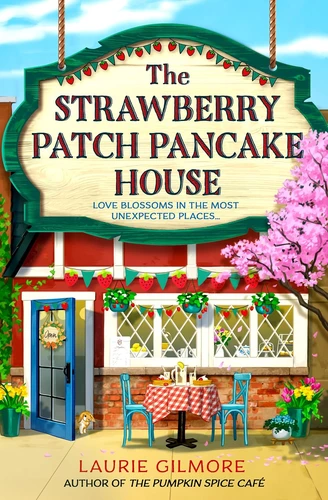
I met this book on a Tuesday night, sprawled across my sofa with a blanket that smelled faintly of last winter. I had just finished a shift that left me questioning every life choice I had made, and I wanted something soft. Something that would not demand anything from me. I picked up Laurie Gilmore’s The Strawberry Patch Pancake House expecting harmless fluff. I did not expect to feel seen.
The premise is simple. Archer, a world-renowned chef and single dad, moves to Dream Harbor to run a pancake restaurant and find a community for his daughter, Olive. Iris, a woman who has never held a job for more than a few months, gets hired as his live-in nanny. They share an apartment across the hall from each other. He cooks shirtless. She tries to keep things professional. Chaos, predictably, follows.
Here is what struck me. This book is not really about pancakes or small-town charm. It is about two people who believe they are fundamentally broken. Archer thinks he cannot be a good father without a perfect setup. Iris thinks she is incapable of commitment, to jobs or people. Their romance works because they do not fix each other. They just decide to stay anyway.
The Messy People Who Deserve Love
What makes this book work is Gilmore’s refusal to make her characters flawless. Archer is not just a handsome chef with a tragic past. He is a man who genuinely panics about packing Olive’s lunch and second-guesses every parenting decision. Iris is not just a quirky free spirit. She is someone who has internalized every failure and now expects rejection around every corner. Watching them stumble toward each other felt less like a fantasy and more like a mirror, honestly.
The core image that stayed with me is the pancake griddle itself. Hot surface, sizzling batter, things that take time to cook properly. That is the whole book, really. These two people are raw ingredients that need patience, not pressure, to become something good. Gilmore weaves this metaphor through the novel without being heavy-handed about it. The restaurant becomes a third character, a warm space where misfits gather and slowly learn to belong.
I will admit the book has its flaws. The mystery subplot, something about a vandal in town, felt tacked on and resolved too quickly. Some readers will find the small-town charm cloying, and the pacing sags in the middle when the couple dances around their feelings for maybe ten chapters too long. But here is the thing. I did not care. The comfort of this book is not in its plot mechanics. It is in the way Gilmore lets her characters be messy without punishing them for it.
Belonging, Not Perfection
This book argues that you do not need to have your life together to deserve love. You just need to show up, again and again, even when you are scared.
Read it if you are exhausted by perfectionist romance heroes and heroines who never break a sweat. Read it if you have ever felt like the odd one out in your own family and found belonging elsewhere. Read it if you want a romance that feels like a hug, not a competition. If you need high stakes or plot twists, skip it. This is a slow, warm burn, and it knows exactly what it is.
Gilmore also gives Olive some of the best scenes in the book. She is not just a plot device to keep the adults apart. She is a fully realized kid who struggles with her own anxieties about moving and making friends. Watching Iris learn to care for her, not as a job but as a person, was the emotional core that held everything together. The found family here is earned, not assumed.
I came away from this book with something I did not expect. It made me reconsider my own impatience with my messier impulses. I do not need to be a world-renowned chef to be worthy of a quiet Tuesday night with a good book. I just need to keep showing up.
This book will not solve your life. But it will make you feel slightly less alone in the moments when you are convinced you are too much or not enough. And honestly, that is a rare kind of magic.
“Sometimes the best things in life are a little burnt on the edges.”

