I found myself thinking about a question the other day. It came quietly, while I was standing in a used bookstore, running my fingers along a row of dusty spines. What if I told you that the entire modern world your science, your politics, your sense of pleasure and death all of it can be traced back to one forgotten poem, rediscovered by a man who probably never meant to change anything? That is the story Stephen Greenblatt tells in The Swerve. And it made me wonder: have you ever been quietly undone by a book you didn’t choose?
How a Monk Accidentally Changed History
The hero of this story is not a king or a scientist. He is Poggio Bracciolini, a 15th-century papal secretary who loved old manuscripts the way some people love wine. He hunted them. He stole them from monastery libraries. He copied them by hand when no one was looking.
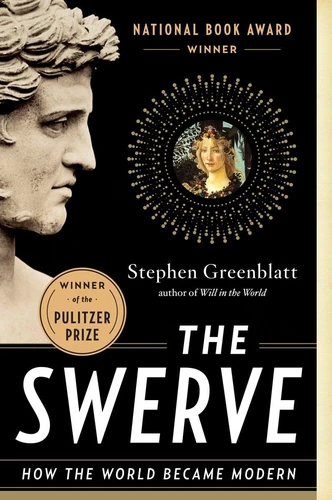
Greenblatt paints Poggio as a man of appetites. He was vain, ambitious, and deeply impatient with the world around him. But he had a gift. He could smell a lost text. In 1417, while wandering through a German monastery, he found a copy of Lucretius’s On the Nature of Things. It was a poem written over a thousand years earlier. It argued that the universe is made of atoms, that the soul is mortal, that the gods have no interest in us, and that pleasure is not a sin but the point of being alive.
Imagine finding that. Imagine reading it in a world where every idea you just listed could get you burned at the stake.
Here is the suspense Greenblatt builds so well. Poggio did not just copy the poem. He sent it out into the world, and it spread. It leaked into the minds of artists and thinkers. It whispered to Galileo. It nudged Montaigne. It shaped Thomas Jefferson. One book. One monk. A thousand years of silence. And then a swerve.
The Beautiful Loneliness of a Universe Without Gods
The core of this book is not really about Poggio. It is about Lucretius, the Roman poet who wrote the thing. And it is about us.
Greenblatt gives us Lucretius’s central idea with a tenderness that surprised me. The universe is made of tiny particles, Lucretius said. They fall through empty space. But sometimes, for no reason at all, they swerve. They deviate. That tiny unpredictable movement is what makes change possible. It is what makes free will possible. It is what makes life possible.
The imagery Greenblatt uses stays with you. Atoms falling like dust in sunlight. The swerve like a breath catching. The idea that nothing is predetermined, that the world is not a machine built by a watchmaker god, but a chaotic, beautiful, accidental dance.
I felt something shift while reading this. Not intellectually. I already knew about atoms. But emotionally. Lucretius was saying something radical. If there is no afterlife, if the soul dies with the body, then this life is all we have. And that is not a tragedy. It is a liberation. We are free to feel joy without guilt. We are free to stop fearing death. We are free to love the world exactly as it is, with all its mess and loss.
Greenblatt does not lecture you on this. He shows you. He walks you through the fear that the medieval church had of this poem. He shows you how the church tried to bury it. And then he shows you how it kept surfacing, like something alive.
What It Means to Be Alive in a Random World
So here is what I took from this book. It is not a history lesson. It is a mirror.
We live in a time of anxiety. We worry about meaning. We worry about purpose. We wonder if our choices matter. And then this poem from two thousand years ago floats up and says: maybe they do. Maybe the randomness of the universe is not a curse. Maybe it is the only thing that makes choice real.
There is a moment in the book where Greenblatt describes the medieval worldview. Heaven above. Hell below. Every suffering a test. Every pleasure a trap. And then Lucretius comes along and says: no. The earth is just atoms. The stars are just atoms. You are just atoms. And that is enough.
The insight that stayed with me is this. The swerve is not just about atoms. It is about us. It is about the possibility that we are not trapped in any story, not even the story of our own past. We can swerve. We can change. We can find pleasure without shame. We can face death without fear.
I closed the book and sat still for a long time. I thought about the monk who copied the poem. The poet who wrote it. The chance that brought it to me. And I wondered: what if the book that changes your life finds you the same way the atoms find each other? By accident. By swerve.
Maybe that is what this book wants you to feel. That you are not lost. You are just falling, like everything else, through the dark. And sometimes you swerve. And that is where the light comes in.
