I went to a friend’s house for dinner last week. Her mother, a quiet woman who rarely speaks English, sat in the corner. At one point, she said something in her native tongue. Nobody translated. I smiled, not understanding. Later, my friend whispered: “She said the rice is too salty. But she meant something else.”
I thought of that moment while reading Rabih Alameddine’s new novel, winner of the 2025 National Book Award for Fiction. The book asks a question I have been circling my whole adult life: what do we do with the stories our mothers will not tell us?
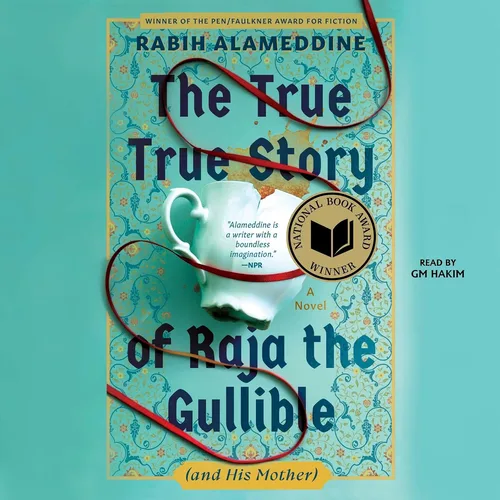
The Protagonist Who Lies to Tell the Truth
Raja is a compulsive liar. I mean that literally. He fabricates entire childhoods, invents dead parents, creates elaborate backstories for strangers on the subway. His mother, a woman of few words and many silences, watches him with a look I recognized instantly. The look that says: I know you are making this up. And I am letting you.
The central conflict is not plot-driven. It is not about whether Raja will get caught. It is about whether he can stop long enough to hear what his mother is not saying. Alameddine gives us a protagonist who is exhausting, infuriating, and deeply lovable. Raja’s lies are not malice. They are armor.
The mother, whose name we learn only late in the book, carries a history that Raja has never asked about. The novel’s suspense comes from the question: will he have the courage to ask? I will not tell you the answer. But I will say this: the moment when the truth finally arrives, it arrives not as a confession, but as a story within a story. A fiction inside a fiction.
The Craft of the Unspoken
The core theme here is inheritance. Not of money or land, but of trauma, of silence, of the things we pass down without ever saying aloud. Alameddine uses a key image: the mother’s hands. They are always doing something. Kneading dough, folding laundry, smoothing Raja’s hair. The hands speak what the mouth will not.
What struck me most was how Alameddine handles the structure. The novel is not linear. It loops, digresses, contradicts itself. Raja will tell you a story, then correct it, then correct the correction. At first I found this frustrating. Then I realized: this is exactly how memory works. This is exactly how we talk about our mothers.
The author’s craft is invisible in the best way. He does not announce his techniques. He simply lets Raja’s voice carry us. And because Raja is unreliable, we become active readers. We have to decide what to believe. That is the point. Sometimes the only way to reach a truth is to wade through a sea of falsehoods.
What This Book Gives You
This novel is for anyone who has ever felt that the real story of their family lives in the gaps. It is for the children of immigrants, yes. But it is also for anyone who has sat across from a parent and known, with absolute certainty, that there was a chapter being withheld.
The book has one limitation, honestly. It is not for readers who need clean resolutions. Alameddine leaves threads dangling. He refuses to tie everything up. Some readers will find this frustrating. I found it honest.
What you get instead is a kind of permission. Permission to tell your story wrong. Permission to embellish, to forget, to invent. Because sometimes the invented version is the one that carries the emotional truth.
The core insight: The stories we make up about our mothers are not lies. They are love letters written in a language we are still learning to speak.
