I was standing in my kitchen, staring at a half-packed suitcase on the bed. It wasn’t mine. It belonged to a friend who had just left her husband. She had called me, voice shaking, and said, “I did it. I left.” And then silence. I realized I didn’t know what to say next. What do you say to someone who has just escaped? Congratulations feels wrong. Relief is too simple. The truth is, we don’t talk much about what happens after the door slams shut. We talk about the running. We don’t talk about the standing still in the new place. Colson Whitehead’s The Underground Railroad does not let us off that hook. It takes the literal, historical Underground Railroad and turns it into a real subterranean train. But the train is just the vehicle. The question is: Where does it take you, and is that place any safer?
The Body That Carries the Wound
Cora is the protagonist, and Whitehead gives her a body that remembers everything. She is not a hero. She is a young enslaved woman on a Georgia plantation, and she is small and stubborn and afraid. When she decides to run, it is not because she is brave. It is because she has nothing left to lose. Her mother ran years before, and Cora carries that abandonment like a stone in her chest. The escape is brutal: a white man named Caesar helps her, they find a trap door, they climb down into the dark. And then the train comes. It is a real train, with a locomotive and iron wheels. I’ll be honest, the first time I read that, I thought it was a gimmick. But Whitehead is too smart for that. The train becomes a metaphor for the machinery of escape itself. Every state Cora passes through is a different version of American horror. South Carolina offers a false freedom, medical experiments on Black bodies. North Carolina is a place where Black people are simply hunted and lynched. Indiana is a fragile utopia that cannot hold. What Whitehead shows us is that there is no final station. Cora keeps moving, and every stop asks the same question: How do you build a life when the world is designed to destroy you?
The Landscape That Refuses to Heal
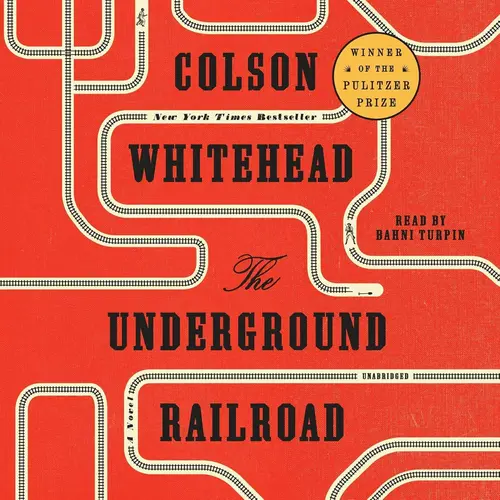
The core theme here is not slavery. It is the impossibility of a clean break. Whitehead uses a recurring image: the train tracks themselves. They run through tunnels, past abandoned stations, through forests that are not safe. He writes about the darkness of the tunnel as a kind of weight. It presses on Cora’s chest. She cannot see. She does not know if the next station will be a trap. This imagery is not just setting. It is the emotional truth of the book. You can run, but the darkness follows you. You can leave the plantation, but you cannot leave the trauma. I think this is what makes the book so uncomfortable. Whitehead does not offer a happy ending. He offers a deeper truth: that freedom is not a place you arrive at. It is a condition you fight for every day. The imagery of the railroad becomes a kind of longing. The rails are always pointing somewhere else. But the somewhere else is never enough.
The Lesson We Still Refuse to Learn
Honestly, reading this book in 2025 feels like a mirror I did not want to look into. We talk a lot about escape now. People leave jobs, relationships, cities, countries. We think of escape as a solution. Whitehead’s book whispers something else: that escape is only the first step. The real work is what you do with the silence after the train stops. The book has flaws. Some chapters feel rushed. The character of Caesar disappears too quickly. But that is almost the point. The book is not a tidy narrative. It is a wound that refuses to close. I recommend this book to anyone who has ever left something and wondered why they still felt trapped. It will not give you easy answers. But it will give you company in the dark.
