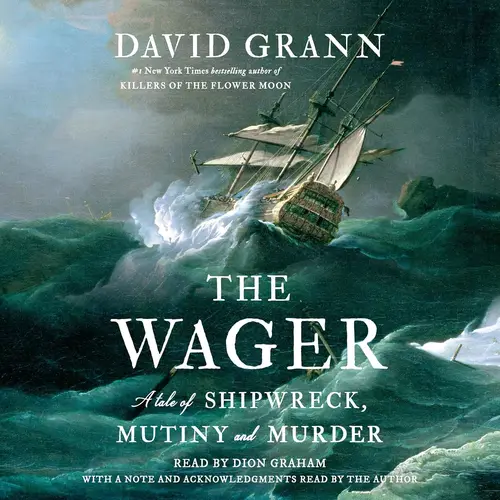
I found myself staring at the ocean last week, watching waves fold over themselves, and I couldn’t stop thinking about the men on the Wager. David Grann’s book is not really about a shipwreck. It is about the stories we craft when the world falls apart.
The year is 1740. The British warship HMS Wager sets out to raid Spanish treasure ships. Then it crashes onto a desolate island off Patagonia. What follows is not a simple survival tale. Grann asks a quiet, brutal question: What happens to the truth when everyone is starving?
The captain, David Cheap, is a man of rigid order. He believes in the navy’s rules even as his men rot from scurvy. The gunner, John Bulkeley, is a pragmatic leader who questions whether loyalty to a dying captain matters more than feeding the living. These two men embody the book’s central tension. Cheap represents a world that no longer exists. Bulkeley represents the world that is. You watch them argue over provisions, over command, over who gets to tell the story of what happened. The suspense is not about who survives. It is about who decides what survival means.
Grann does not judge. He lets the men’s own journals and testimonies speak. And the contradictions pile up. One survivor says Cheap was a hero. Another says he was a madman. I realized that the book is not solving a mystery. It is showing how memory becomes a weapon.
The Weight of a Single Decision
The imagery Grann uses is stark. There is the constant cold. The endless gray sky. The men chewing on scraps of leather. But the most haunting image is the ship itself. The Wager was a vessel of empire, built for dominance. When it breaks apart, the fragments become something else. A piece of wood becomes a raft. A cannon becomes a tool for trade. Grann shows how civilization is not a permanent state. It is a performance that requires an audience.
The core theme is loyalty. Not the noble kind we sing about. The dirty, practical kind that shifts when your child is crying from hunger. Grann writes about a moment when the survivors debate whether to eat a dead man’s body. They do not call it cannibalism. They call it “the last resort.” And that phrase haunts me. Because it shows how language bends to fit our needs. We do not betray our friends. We make a “necessary decision.” We do not mutiny. We “preserve the remaining lives.”
Grann does not condemn or celebrate. He just watches. And I found myself asking: In their place, what story would I tell myself?
The Fragile Architecture of Order
This book matters now because we live in a world where institutions are crumbling. The Wager is a parable for our moment. When the government fails, when the supply chain breaks, when the rules no longer apply, what do you hold onto? The men on that island had to choose between the captain’s authority and their own survival. They chose survival. And then they had to live with that choice.
The book is not for everyone. It is dense with historical detail. There are long passages about naval politics and 18th century ship design. But if you push through, you find a mirror. You see how thin the line is between order and chaos. You see how quickly a person can become a stranger to themselves.
The core insight is this: The worst thing about survival is not the hunger or the cold. It is the person you become to survive. The Wager is a book about that transformation. It does not offer comfort. It offers clarity. And maybe that is enough.
