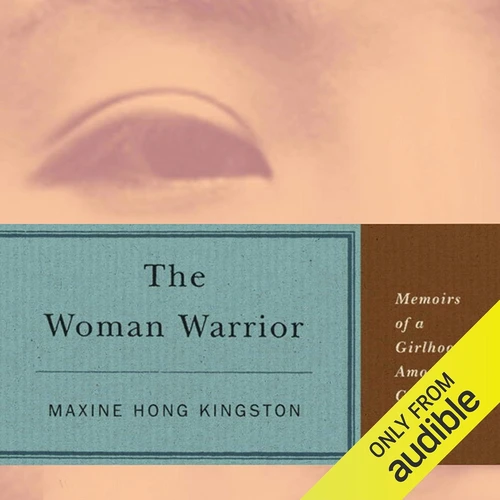
I have a confession. I finished this book, closed it, and didn’t know what I had just read. It felt like a dream I couldn’t shake. A memoir? A novel? A collection of ghost stories? The answer, I think, is all of them at once. The question this book plants in your gut is simple and terrifying. How do you build a self when the stories you inherit are made of silence and screaming?
The Girl Who Could Not Speak
The protagonist, if you can call her that, is a young Chinese-American girl growing up in California in the 1950s and 60s. Her mother, Brave Orchid, fills her ears with wild tales. A no-name aunt who drowned herself in the family well. A woman warrior who trained in the mountains and carved revenge into her enemies’ backs. A sister who fed her own children to the pigs. These are not comforting bedtime stories. They are warnings. They are curses. The girl herself is painfully shy. She does not speak at school for years. The other kids think she is stupid. In reality, she is drowning in a world where one set of rules says be silent and obedient, and another set demands you speak up and succeed.
The core conflict is not a villain you can punch. It is the gap between two cultures. Her mother’s China is a place of ghosts, rituals, and brutal lessons. America is a place of report cards, dentists, and the pressure to be seen. The girl does not know how to be both. She cannot be the perfect Chinese daughter and the loud American success. The suspense here is not about what happens in the end. It is about whether she will ever find a voice that feels like her own. You keep reading because you need to know if she breaks the silence or if the silence breaks her.
The Knife and the Ink
The book runs on a deep tension. On one hand, you have the brutal reality of racism, poverty, and family shame. On the other hand, you have soaring, impossible myths. A woman who trains with a hermit in the clouds. A ghost that haunts a village because she was not mourned. Kingston does not separate these two worlds. She smashes them together. She turns her own anger into a fantasy where she cuts down a bully with a sword. It is not real. But it is true. The truth of how it felt. That is the core theme. Memory is not a photograph. It is a story we tell ourselves, filled with gaps we fill with imagination.
The key imagery is the throat. The no-name aunt cuts her own throat. The girl’s mother cuts her tongue so she can speak. The girl herself cannot swallow her words. It is a brutal, visceral image. You cannot read it without feeling a knot in your own throat. What Kingston understands is that silence is not empty. It is packed with shame, anger, and love. The stories we do not tell shape us just as much as the ones we do. She is not writing a neat autobiography. She is digging up the bones of her family and arranging them into a shape that makes sense, even if that shape is a fantasy.
The Ghost We Are All Haunted By
I think this book works because it refuses to be one thing. It is a confession. It is a scream. It is a love letter to a mother who was both a tyrant and a hero. Kingston does not resolve the tension. She lives inside it. And maybe that is the point. You do not have to choose between your mother’s myths and your own reality. You can build a self that holds both.
The book has flaws. It wanders. Some chapters feel like you are lost in a fog. The line between truth and fiction is so blurry that you start to wonder if anything really happened. But I think that is the gift. Kingston is asking us to question what “real” even means. Is the story of your childhood as you remember it more true than the story your mother tells? Maybe the only honest way to write a life is to admit that you are making it up as you go.
Who is this book for? It is for anyone who has ever felt split between two worlds. Anyone who has ever sat in a room full of people and felt completely alone. Anyone who has ever wondered what their parents are not saying. It is not a light read. It is a book that will sit on your chest for days. But it gives you something precious. Permission to tell your own story, even if you have to lie to get it right.
I finished it and thought about my own grandmother. The stories she told me, the ones she refused to tell. The silence between us. What would she say if she could speak freely? What would I say if I had the courage?
Maybe that is the real question the book leaves you with. What story are you not telling yourself?
