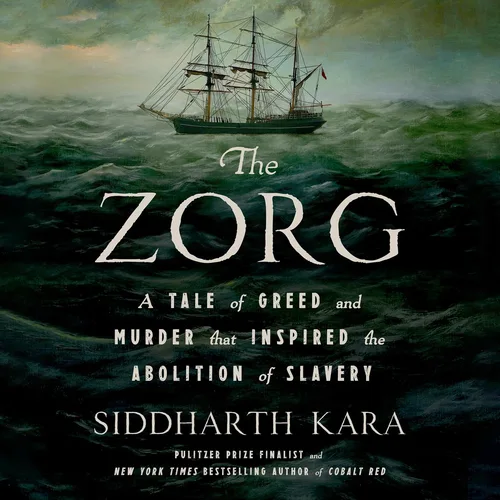
I was sitting in my living room, scrolling through news about another corporate scandal, when I picked up Siddharth Kara’s new book. The Zorg: A Tale of Greed and Murder. I had read his earlier work, Cobalt Red, and knew what to expect. Hard truths. Painful details. But this one hit different.
The book reconstructs a single voyage. The Zorg, a slave ship, carrying African captives across the Atlantic. Kara doesn’t just tell you what happened. He makes you feel the humidity of the hold, the weight of chains, the silence that falls when hope dies. And then comes the massacre. A calculated killing of enslaved people, not by accident, not by storm, but by human choice.
Here is the question the book plants in your chest: When profit and morality collide, which one wins? Every section of this review serves that single question. Kara’s answer is brutal.
Character and Plot: The Ship as a Mirror
The protagonist of this story isn’t a person exactly. It is the Zorg itself. A wooden vessel that becomes a character through Kara’s telling. He traces its construction, its owners, its crew. The captain, a man named John, is not a cartoon villain. He is ordinary. A businessman. He makes decisions based on ledgers, not cruelty. But the ledgers demand cruelty.
Kara shows us the captives too. He names some of them from historical records. Their faces emerge from the dark. I found myself holding my breath as I read about a young woman who tried to escape before the ship left port. She didn’t make it. Her punishment was public. Others watched.
The core conflict is not between good and evil. It is between greed and decency. Between the system that rewards profit and the human instinct to care. Kara never reveals the final fate of every individual, which is fitting. History does not give us tidy endings. What he does is make you feel the suspense of that voyage. The terror that hangs in the air. The knowledge that the ship’s owners are in London, counting money, while men and women die in chains.
I will call this section: “The Ordinary Face of Evil.”
Theme and Imagery: The Language of Silence
The core theme of The Zorg is moral amnesia. How we forget. How we choose to forget. Kara uses a recurring image that stuck with me: the ledger. The ship’s log. Pages of numbers, names, prices. The language of commerce applied to human beings.
He describes the moment when the captain writes down the deaths. Just numbers. A column for losses. The imagery is cold, efficient, terrifying. Because that is how systems work. They translate human suffering into data. Then they file it away.
Kara’s craft is sharp here. He does not lecture. He lets the ledgers speak. He lets the silence after the massacre speak. There is a passage where he describes the ocean after the bodies are thrown overboard. The water closes. No trace. That is the real horror. Not the violence itself, but how easily it is erased.
The universal pattern Kara reveals is this: When economic systems reward cruelty, cruelty becomes rational. The men on the Zorg were not monsters. They were accountants with whips. That is worse.
I will call this section: “The Ledger Never Weeps.”
Elevation and CTA: What We Still Owe
Kara does something remarkable in the final part of the book. He connects the Zorg to today. Not in a heavy-handed way. Just a quiet observation. He notes that the same logic that drove the slave trade now drives the cobalt mines. The same ledgers. The same numbers. The same silence.
The book has a weakness, I think. Kara sometimes assumes the reader already knows the history of the transatlantic slave trade. For a newcomer, the timeline might feel rushed. But that is a small flaw. The strength is in the moral argument.
Who should read this? Anyone who believes that history is dead. Anyone who thinks progress is automatic. Anyone who has ever wondered why some stories are told and others buried. The Zorg will not give you comfort. It will give you a mirror.
I recommend reading it in two sittings. The first half is the voyage. The second half is the aftermath. Let the silence between them sit with you.
Maybe that is what justice really is. Not revenge. Not punishment. Just the refusal to look away.
