I was scrolling through news feeds last week, the usual blur of disasters and denials. A headline about a shipwreck off Libya caught my eye. Hundreds of people, missing. And I thought, honestly, I thought: how do we keep forgetting?
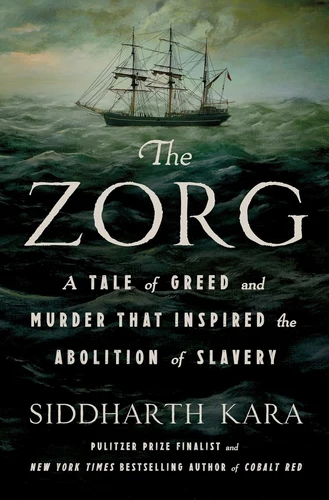
Then I picked up Siddharth Kara’s new book, The Zorg. And I realized forgetting isn’t an accident. It’s a skill. A craft. The book asks a question that followed me for days: What happens when a crime is so monstrous that even the people who committed it try to erase it from memory? And what happens when someone decides to dig it back up?
What The Zorg Actually Does: A Story of a Ship Named “Care”
Let me tell you about the ship. The Zorg. Dutch for “care” or “sorrow.” A slave ship. In 1781, its captain, a man named Tjaart van der Wel, faced a problem. His human cargo was sick. The slaves were not going to sell well in the Caribbean market. So he did something that sounds like fiction. He ordered 132 African men, women, and children thrown overboard into the Atlantic. Alive. He did this to claim insurance money. The logic was simple: if slaves die at sea from disease, the owner loses money. If they are “jettisoned” to save the ship, the insurance pays.
Kara does not let you look away. He describes the moments in the hold. The smell. The silence before the hatch opened. The screams that nobody heard. It is brutal. But here is the twist that makes this book special. The massacre did not stay hidden. Some crew members talked. A whistleblower emerged. And a trial began in Amsterdam. A trial that became a spark for the Dutch abolition movement. A trial that, for reasons Kara explores, almost got erased from official history.
I will not tell you how it ends. That would be unfair. But I will say this: the real drama is not on the ship. It is in the courtroom. It is in the fight over what gets written down and what gets tossed overboard just like those bodies.
The Dark Light of History: What the Book Really Asks
Kara’s central idea is simple but devastating. History is not a record of what happened. It is a record of what people decided to keep. The Zorg massacre was documented. The trial records existed. But over two centuries, they were buried. Why? Because the truth was inconvenient. Because the Dutch slave trade was profitable. Because empires do not like to look at their own shadows.
The writing itself is tight. Kara writes like a journalist who has seen too much. Short sentences. Sharp observations. He does not moralize. He just shows you the evidence and lets you sit with the discomfort. One image stayed with me. He describes the ocean near the Zorg’s route as “a graveyard with no headstones.” That is the book’s subtle light. Not hope, exactly. More like a flicker of insistence. The idea that even if the bodies are gone, the story can still be told.
The book is not perfect. Sometimes Kara rushes through the trial proceedings. I wanted more of the lawyers, more of the arguments. But maybe that is the point. The book is not a complete history. It is an excavation. A dig. And digs always leave some bones in the ground.
What This Book Gives You: A Mirror for Today
So who is this book for? Honestly, everyone. But especially people who think they know history. People who believe the past is settled. Kara shows that the past is never settled. It is always being fought over. The Zorg massacre is not a distant horror. It is a pattern. Look at the news today. Migrant boats sinking in the Mediterranean. People thrown overboard, literally. Insurance claims denied. The same logic, two centuries later.
What did I get from this book? A new understanding of how stories survive. Not through official archives. Through stubborn people. Through whistleblowers. Through writers like Kara who refuse to let the silence win. And a question I cannot shake: What crimes are happening right now that we will only learn about in 200 years? What bodies are being thrown overboard in plain sight, with nobody writing it down?
The Zorg is a book about a ship. But it is really a book about what we choose to remember. And what we choose to forget. And whether, in the end, we have the courage to look at both.
