I was sitting in my car after a bad day, staring at nothing. My phone buzzed with a notification: LeBron James had just scored his 40,000th point. I felt something rise in my chest, a dumb, irrational pride. It made me wonder: why do we invest so much of ourselves in the ascent of strangers? Why do we tie our own small lives to their giant leaps?
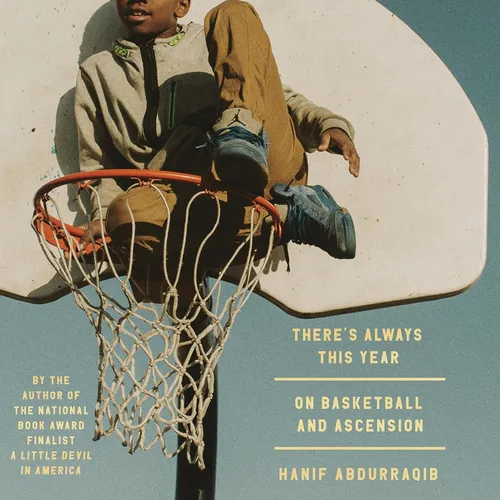
Hanif Abdurraqib’s new book, “There’s Always This Year: On Basketball and Ascension,” doesn’t just answer that question. it dismantles it, rebuilds it, and hands it back to you covered in the dust of a Columbus, Ohio summer. The book asks something quieter, more painful: what happens to the people who never ascend?
A Boy, A City, and A King Named LeBron
Abdurraqib gives us a protagonist who is himself, but more specifically, he gives us a young Black boy growing up in the shadow of two things: the crack epidemic of the 1980s and the slow, miraculous rise of LeBron James from Akron. The boy watches LeBron on a grainy television. He watches him glide. He watches him become a myth while the streets around him harden.
But here is the twist that gives the book its soul. Abdurraqib is not writing about LeBron’s championships. He is writing about the summer LeBron left Cleveland for Miami. He writes about the feeling of betrayal, the broken glass on the playground, the friends who stayed angry and the friends who just stayed. The core conflict is not between teams. It is between the dream of escape and the reality of staying. You feel it in every sentence. The question becomes: when your hero leaves, what do you do with the empty court?
The Weight of the Rim, The Light of the Arc
The core theme here is not basketball. It is ascension. Abdurraqib uses the word carefully, almost like a sacred object. He asks: what does it mean to ascend if you are tethered to a place that is sinking? The key imagery is not the buzzer-beater or the championship parade. It is the chain-link fence. It is the peeling paint on the backboard. It is the sound of a ball hitting concrete at 2 AM, when there is no one left to watch.
He writes about the geometry of a jump shot, the arc of the ball against the night sky. But he also writes about the arc of a life. He shows how a single game can contain the entire history of a city. The crack dealers become the pick-and-roll defenders. The mothers become the coaches. The book argues that every jump shot is a prayer for something better, and every missed shot is a lesson in staying on the ground.
What We Carry When We Finally Leave
I finished this book on a Tuesday night. I walked outside and looked at the sky. I thought about my own “basketball” — the thing I loved that never loved me back. The book’s deepest argument is that ascension is a lie we tell ourselves. The real work is not rising above your people. The real work is learning to see the beauty in the ground you stand on.
Abdurraqib writes about his mother. He writes about the friends who are dead now. He writes about the sound of rain on a tin roof. He writes about the year LeBron came back to Cleveland and won, and how that victory felt like a ghost walking through the living room. The book has a flaw, I think. It meanders. It circles back. It forgets its own point for a paragraph or two. But that is also its greatest strength. It refuses to be clean. It refuses to ascend.
Who is this book for? It is for anyone who has ever loved a sport they were never good at. It is for anyone who has ever cried at a victory that was not theirs. It is for the kid who shot hoops alone in the driveway long after the streetlights came on. You will finish knowing that the question was never about LeBron. The question was always: what do you do with the love that stays when the game ends?
