I was at a dinner party recently, and someone said their family never talked about hard things. I nodded. Then I thought about Gupta’s book. The gap between how we present and what we feel. That gap is what this memoir excavates. It asks: what happens when a family sacrifices everything for an image of success? And what happens to the one who refuses to stay quiet?
A Family Portrait That Shatters
Gupta’s brother, J.D., is the heart of this story. He was brilliant. He was troubled. He was the golden son who later died by suicide. Gupta writes about him with a tenderness that feels earned, not sentimental. I found myself pausing at her descriptions of their shared childhood. The pressure to excel. The unspoken rule that their family’s struggles were never to be discussed outside the home.
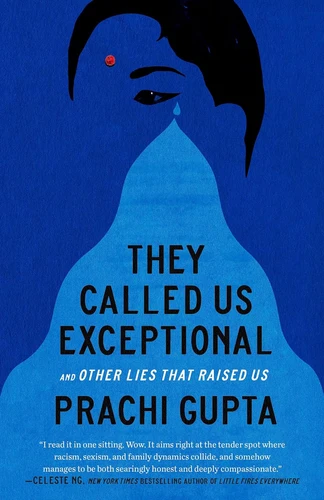
Her father is a successful doctor. Her mother is the keeper of the family’s public face. And Gupta herself is the daughter who finally breaks the silence. The tension builds slowly, like a bruise you didn’t notice forming. You know something terrible is coming. But the book never feels like a tragedy. It feels like a reckoning.
The core conflict is simple and devastating: how do you love a family that demands you betray your own truth? I won’t spoil the ending. But I will say that Gupta doesn’t offer easy answers. She offers something harder. A willingness to sit with the mess.
The Invisible Wound of Expectations
The central theme here is something I’m calling “the performance of exceptionalism.” Gupta shows how her family, like many immigrant families, adopted the model minority myth as survival strategy. Be exceptional. Be invisible. Be grateful. Do not complain.
What struck me was her subtle use of light imagery. She writes about the bright, clean surfaces of their home. The polished kitchen counters. The framed achievements on the wall. Then she shows the dark corners. The conversations that never happened. The doors that were kept closed. It’s a metaphor that runs through the entire book. The family’s public shine is exactly what hides the private rot.
Gupta weaves in historical context. She connects her family’s story to the legacy of colonialism, to the pressure of assimilation, to the American myth of meritocracy. This could have felt academic. It doesn’t. Because she always returns to the specific. The way her mother’s hands trembled. The way her father’s voice went flat. The way J.D. stopped laughing.
This isn’t just one family’s story. It’s a pattern. Many of us have felt the weight of being “exceptional” at the cost of being whole. The book names that cost.
What We Gain When We Stop Performing
Gupta ends with a kind of quiet acceptance. She does not reconcile with everyone. She does not fix the past. She chooses herself. Honestly, I found that more powerful than any neat resolution.
The book’s resonance extends beyond the Indian American experience. It speaks to anyone who has ever felt split between two versions of themselves. The version they show the world and the version they hide. In an era of curated social media lives, this feels especially urgent. We are all performing. We are all hiding something.
The criticism I would offer: Gupta’s analysis of her parents’ motivations could go deeper. There are moments where I wanted more of their internal lives. But maybe that’s the point. They were so skilled at hiding that even their daughter cannot fully reach them.
What you get from reading this memoir is a mirror. You might see your own family’s silences. You might recognize the cost of your own ambitions. And you might, like Gupta, find the courage to stop performing.
I recommend this book to anyone who has ever wondered: what would it mean to be ordinary? And what would it mean to be okay with that?
