I found myself at a dinner table recently, listening to three old friends describe the same road trip. One remembered the rain. One remembered the silence. One remembered a dog that ran alongside the car for ten miles. None of them were wrong. I thought of Alexis Wright’s Tracker: Stories, a book that does something similar with a human life.
What happens when a biography refuses to pick a single voice?
Tracker Tilmouth was an Aboriginal leader from Central Australia, a man of fierce intelligence and stubborn hope. Wright, an Indigenous writer herself, decided not to write his story the usual way. She gathered dozens of testimonies. Friends, family, colleagues, enemies. Each person speaks from their own angle. The result is not a smooth portrait but something more honest: a mosaic where you can see the gaps between the tiles.
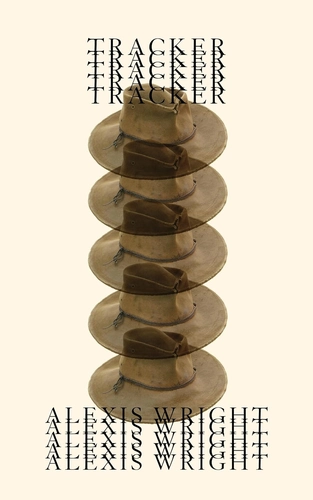
You meet Tracker through fragments. Someone remembers his laugh, how it filled a room like a storm. Someone else recalls his silences, the way he could sit without speaking for hours. A third person describes his political strategy, his gift for making people believe in impossible things. The man is never fully there. He is always slipping between voices. I found that frustrating at first. I wanted a clear line, a beginning and end. But maybe that is the point. Maybe a life is too large for one narrator.
The book asks a strange and uncomfortable question: whose version of a life counts as true? Wright builds her argument through structure alone. She gives each speaker equal weight. No one gets the final word. Even Tracker himself, when he appears, does not dominate. He is just one voice among many.
The core theme here is collective truth. Wright suggests that reality is not a single story but a conversation. The way she handles light and shadow in these testimonies is subtle. One speaker paints Tracker as a visionary. Another shows his flaws, his temper, his failures. Both sit side by side. Neither cancels the other out. The book trusts you to hold contradictions.
I kept thinking about how we tell our own lives. We edit. We smooth the rough edges. Wright does the opposite. She lets the rough edges stay. The book is uneven, sometimes repetitive, sometimes confusing. That is not a flaw. It is the method. A clean biography would have been a lie.
This is a book about who gets to tell the story. For Indigenous Australians, that question is not abstract. History was taken from them, written by outsiders. Wright gives the telling back. But she does not replace one authority with another. She spreads the authority across many hands.
What I took from Tracker: Stories is a new patience with uncertainty. I used to think a good biography made you feel you knew the person. This book made me feel I will never fully know anyone, and that is okay. Maybe that is what love looks like in writing: not possession but permission. Permission for the person to remain mysterious, even to those who loved them best.
I recommend this book to anyone tired of tidy narratives. If you want a life wrapped in a bow, look elsewhere. If you want to sit with a group of people who loved one complicated man and hear them argue about who he was, pick this up. It will change how you listen.
