Julia’s family inherits a brownstone and a fortune from an elderly neighbor in Nebraska. She gets dropped into an elite New York private school, fails math, and ends up with a tutor. That tutor is Damion, the great-nephew of the man who left Julia’s family everything. He doesn’t believe the will is real. He schemes to get close to her so he can uncover the truth.
The book’s central question is this: can trust be inherited, earned through performance, or manufactured by proximity? Or does it have to be chosen, and chosen again after it breaks?
The Boy in the Tortoise-Shell Glasses
Damion is the character who embodies that question most painfully. He wears tortoise-shell glasses, quotes old movies, and calls Julia “Nebraska” with a smirk she describes as both infuriating and, honestly, a little charming. He’s grieving Remi, the uncle who raised him, and his suspicion of Julia’s family is grief wearing a very convincing disguise.
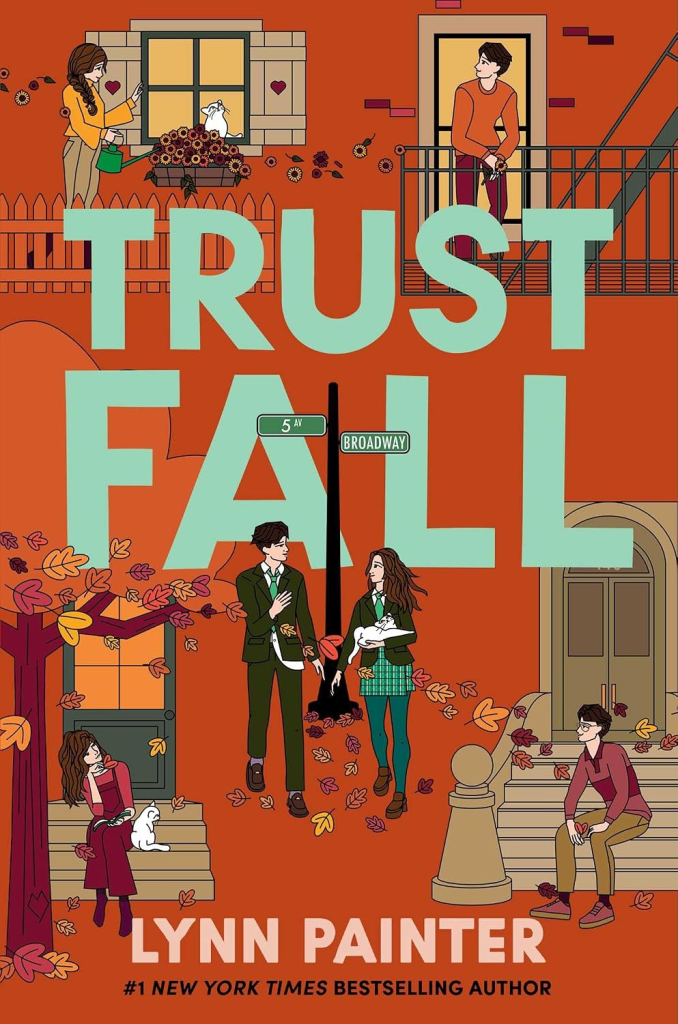
Julia, meanwhile, is awkward in a way that felt uncomfortably familiar. She stutters. She second-guesses. She notices Damion’s glasses are attractive and then immediately tries to convince herself he’s a jerk. The tension between them works because neither one is lying about who they are, exactly. They’re just both hiding what they want.
Painter’s craft here is sharper than her earlier books. The core image that stuck with me is the brownstone itself, a house full of Remi’s things, his books, his photographs, his presence lingering in every room. Julia lives inside a dead man’s life without knowing him. Damion visits that same house and feels like a stranger in the only place he ever called home. The house becomes the argument made physical: inheritance is not the same as belonging. You can be handed a key and still not know where you are.
Grief Wearing a Cute Cardigan
The grief thread is what elevates this from a cute rom-com to something that made me put the book down and stare at the ceiling. Remi appears through chapter epigraphs and through the way both Julia and Damion talk about him. He’s dead before page one, and yet he’s the most alive presence in the story. That’s a hard trick to pull off, and Painter does it without forcing a single tear.
The miscommunication in the third act is heavy. If you’re the kind of reader who gets frustrated when a single honest conversation could solve everything, this will test your patience. I understand why it happens. These are teenagers with grief and pride and no practice at vulnerability. But the plotting leans on it hard enough that I sighed once or twice. The bullying Julia faces at her new school also gets intense, and some of it felt like it existed to raise stakes rather than to reveal character.
The Gen Z slang is another sticking point. It’s accurate, probably, and I believe teenagers talk this way. It also yanked me out of the story more than once. I’m not the target audience for that, I know. But I noticed it.
Who Should Read This
Anyone who wants a fall romance with real emotional weight underneath the banter should pick this up. Fans of Gilmore Girls, Gossip Girl, and stories about class and belonging will find a lot to love. If you’re looking for pure fluff with no grief and no discomfort, this isn’t it. The bullying and the lying might be too much.
What I gained from Trust Fall is a reminder that the people we love leave us with more than objects. They leave us with the version of ourselves we were when they were alive, and that version doesn’t always survive the loss. Damion has to decide who he is without Remi. Julia has to decide who she is with money she didn’t earn. Both of them have to decide whether trust is worth rebuilding after it shatters.
The final chapters land with a quietness that surprised me. No grand speech. No dramatic chase through an airport. Just two people choosing each other and choosing to be honest about how hard that is. It won’t fix your own trust issues. But it will make you feel slightly less alone the next time you wonder whether someone really means what they say.

