I have a friend who adopted a girl from foster care when she was seven. The girl was quiet, polite, almost too easy. Then one day she hid food under her bed. Then she stopped speaking for three days. My friend asked the social worker why. The answer was simple: she had been moved eleven times before age six. Eleven times. I thought of that girl while reading Claudia Rowe’s Wards of the State. I thought about what it does to a heart when stability becomes a rumor.
What if the most dangerous thing for a child is not abuse, but something quieter? Not the violence, but the vanishing.
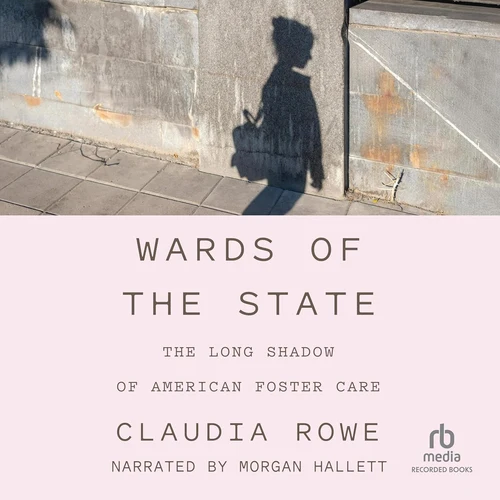
The book opens with a boy named Davon. He is smart, funny, the kind of kid teachers remember. But he has been in six different homes by age twelve. Rowe spends months with him, watching him perform. He charms caseworkers, he flatters foster parents, he does all the right things. But there is a hollowness behind the performance. He has learned that adults leave. So he leaves first, emotionally. He never gets attached. He never argues. He just floats. That is the core conflict of the book. Not the fight against a bad system, but the slow erosion of a child’s ability to believe that anyone will stay. Rowe never tells us if Davon makes it. She leaves us in the tension. It is the right choice.
The book’s title is cruel in its accuracy. Wards. Objects to be guarded. Not children to be loved.
Rowe’s central argument is that the American foster care system is not designed for healing. It is designed for management. She shows this through the imagery of the case file. Every child has one. It follows them, a thick folder of failures. One social worker admits she has never seen a file that ends well. The core theme is durability. Not resilience, which sounds heroic, but durability. The ability to endure without breaking. Rowe argues that children in the system develop a strange kind of strength. They learn to survive without trust. They become excellent at reading room temperature, at sensing when an adult is about to leave. But that skill comes at a cost. They never learn to rest. Rowe writes with a journalist’s restraint, but the emotion leaks through anyway. She describes watching a child’s face when a foster parent cancels a visit. The child doesn’t cry. He just nods. He has practiced this moment a hundred times in his head.
Here is what I found most haunting. The children who survive the system often become adults who cannot be loved. Not because they are broken, but because they have learned that love is a trick. A setup for the next goodbye.
Rowe’s book is not a policy paper. It is a portrait of a wound that keeps bleeding. She follows the children into adulthood. One woman, now thirty, still refuses to unpack her suitcase. She has lived in the same apartment for five years, but she keeps her clothes in bags. Just in case. Another man, now a father himself, cannot say “I love you” to his own son. He physically cannot form the words. The system did not just fail them in childhood. It redesigned their nervous systems.
The book has a quiet limitation. Rowe does not offer easy solutions. She does not name the villains. She refuses to say “if only we funded this program” or “if only we trained social workers better.” Instead, she suggests that the problem is deeper. It is a cultural failure to see foster children as our children. They are someone else’s problem. And that distance, that coldness, is the real wound.
So here is the question Rowe leaves us with. What does it mean to live in a society that produces children who cannot trust? Who are so used to being moved that they stop unpacking, literally and metaphorically? Maybe the answer is not a new policy. Maybe it is something simpler and harder. To look at a child from the system and say: I will not be the one who leaves.
I think of my friend’s daughter again. She is fourteen now. She still hides food sometimes. But last month, she asked to paint her room. She picked a color. She picked the paint. She wanted it to be hers. That is a small revolution. That is the opposite of a child who keeps her life in bags.
This book is for anyone who has ever wondered why some people cannot receive love. It is for anyone who works with children. It is for anyone who has ever been a child who learned too early that adults cannot be trusted. It will not give you hope, exactly. But it will give you understanding. And maybe that is the more honest gift.
