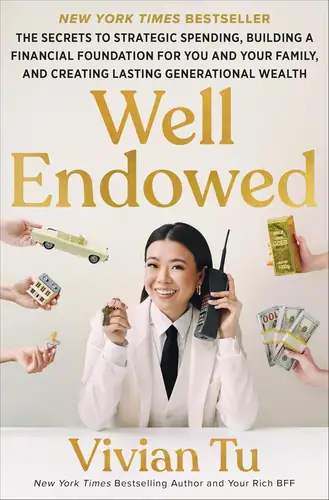
I was sprawled on my couch, half-watching a show about people who renovate houses they can’t afford. My own savings account was doing that thing where it whispers, “we should talk.” I opened Vivian Tu’s Well Endowed: The Secrets to Strategic Spending, Building a Financial Foundation for You and Your Family, and Creating Lasting Generational Wealth thinking, sure, another finance book telling me to stop buying lattes. I was wrong. But here’s the real question: can a book about money actually change how you feel about it, or just what you do with it?
The Protagonist Is You, and You’re Not the Problem
Tu doesn’t write about some mythical investor who never makes mistakes. She writes about you. The book’s central figure isn’t a character with a name. It’s the reader, a person who probably knows they should save more but feels paralyzed by jargon and fear. Tu walks through the core conflict: the gap between knowing what to do and actually doing it. She talks about fertility treatments costing tens of thousands of dollars. She explains how wills and trusts work without making you feel like you should have figured this out years ago. The suspense isn’t about a plot twist. It’s about whether you’ll actually open that high-yield savings account after reading. I’ll be honest: I didn’t open one that night. But I did stop feeling ashamed about not knowing the difference between a Roth IRA and a traditional one. That felt like progress.
The Theme Hiding in Plain Sight: Permission
The core theme here isn’t really about money. It’s about permission. Permission to be where you are financially. Permission to ask questions without pretending you already know the answers. Tu uses a lot of imagery around foundations and building, but the most powerful image is simpler: a person sitting down with a spreadsheet, not because they love numbers, but because they love the people they’re planning for. She talks about generational wealth not as a fantasy but as a series of small, unglamorous decisions. The book’s imagery is mostly practical. There’s no poetic sunset over a 401(k) statement. Instead, there’s a checkbook and a conversation with a partner about what you actually want. Tu’s craft shows in how she makes the terrifying feel manageable. She doesn’t pretend the stock market is simple. She just says, “here’s how it works, roughly, and here’s what you can do next.” That’s the universal pattern: we don’t need perfect answers. We need a next step.
What This Book Won’t Do for You
It won’t make you rich overnight. It won’t replace a financial advisor. It might frustrate you if you’re looking for deep dives into specific investments. The book covers a lot of ground. Tu talks about home financing, estate planning, budgeting in relationships. Some sections feel like they could use more depth. She mentions templates for wills and trusts but doesn’t include them. That’s a gap. But here’s what it does well: it makes you feel less alone. I read a section about arguing with your spouse over money, and I thought, “oh, so everyone does this.” The book is best for people in their 20s and 30s who feel like everyone else already has their financial life together. It’s not for seasoned investors or people who want complex tax strategies. The biggest takeaway for me wasn’t a specific tip. It was the sense that financial literacy isn’t about being smart. It’s about being willing to start. I finished the book and didn’t immediately rebalance my portfolio. But I did write down three questions for my partner about what we want our money to do. That’s something.
