I picked up What Happened to You? on a Tuesday night when I could not sleep. My mind kept replaying a stupid fight with my sister from earlier that day. She had called me selfish. I had called her controlling. Neither of us was right, and both of us were furious. I grabbed the book mostly to distract myself, honestly. I expected Oprah Winfrey and Dr. Bruce Perry to give me some warm, fuzzy affirmations I could roll my eyes at. What I got instead was a mirror held up so close to my face that I had to put the book down twice.
The book asks one central question that sounds simple but is actually revolutionary: what if we stopped asking “what is wrong with you” and started asking “what happened to you?” That shift, from judgment to curiosity, is the entire spine of this book. And it made me wonder, lying there in the dark, how many of my own reactions are not personality flaws but survival patterns from a childhood I have mostly forgotten.
From Judgment to Curiosity
Here is what the book actually does. It is structured as a series of conversations between Oprah and Dr. Perry, interwoven with Oprah’s own painful childhood memories. She grew up in poverty in Mississippi, wearing dresses made from potato sacks, being shuttled between relatives who did not want her. Dr. Perry, a neuroscientist who has spent decades studying traumatized children, explains why those early experiences literally wire our brains. He talks about the stress response system, about how a child who grows up in chaos learns to stay hypervigilant, about how that hypervigilance can look like rudeness or defiance or coldness in an adult.
The core case study that shook me was about a little boy who was brought to Dr. Perry because he was “aggressive” and “uncontrollable.” The boy had been bounced between multiple foster homes. When Dr. Perry looked closer, he realized the boy was not aggressive at all. He was terrified. Every time a stranger approached him, his body went into fight-or-flight mode because his brain expected to be hurt or abandoned again. The “bad behavior” was actually a brilliant adaptation to a terrible environment. That case study reframed something in me. It made me think about people in my own life, the ones I have dismissed as difficult or toxic, and wonder what happened to them.
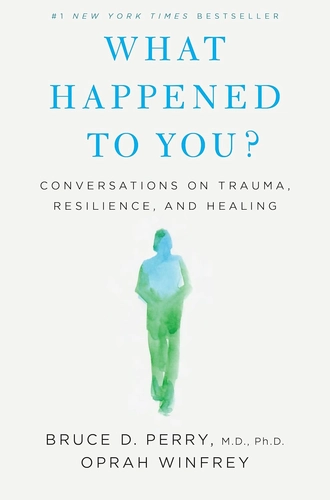
What struck me most was the gentleness of the argument. Neither Oprah nor Dr. Perry ever says that trauma excuses harmful behavior. They say it explains it. There is a huge difference between those two words. Excusing means saying it does not matter. Explaining means understanding the root so you can actually change the pattern. That distinction felt like a door opening in a room I had been trapped in for years.
What the Book Does Well and Where It Falls Short
The greatest strength here is the partnership itself—a genuine meeting of lived experience and scientific rigor. Oprah’s vulnerability is disarming. She talks about being molested by a family member at age nine and how, for decades, she blamed herself. Dr. Perry then explains why her brain responded the way it did: self-blame was actually a survival mechanism. If it was her fault, then she had some control, and control meant hope. That combination of story and science made me understand concepts I had read about before in dry textbooks but never truly felt.
The writing style is conversational and accessible. I read it in three sittings, which is rare for me with nonfiction. The chapters are short and the dialogue between the two authors feels natural, like you are sitting in the room with them. There are also practical sections where Dr. Perry explains how to create “regulating” environments for children and adults, how to use rhythm and movement to calm a dysregulated nervous system.
Now for the parts that made me uncomfortable. The book occasionally drifts into Oprah-speak, the kind of grand, sweeping declarations about purpose and life-changing transformation that can feel a bit much. One million copies sold suggests plenty of people love that energy, but I found myself skimming some of the more inspirational passages. I also think the book could have gone deeper into how systemic issues—poverty, racism, institutional failures—create trauma on a massive scale. Dr. Perry acknowledges these forces, but the solutions he offers are mostly individual. You learn how to heal yourself and your family, but the book has less to say about healing a broken community or a violent society.
There was one moment where I almost threw the book across the room. Oprah describes how, in her forties, she finally confronted her mother. She expected a cathartic explosion. Instead, her mother, who had also suffered a brutal childhood, simply looked at her and said, “I did the best I could.” Oprah realized that her mother had no more love to give because she had never received love herself. It was a heartbreaking moment, but it also felt too neat, too resolved. I kept thinking about people who have been genuinely abused and abandoned, and whether this framework asks too much of them. Are they supposed to simply understand their abusers because abusers were once victims too? The book does not fully answer that question.
The Question That Changes Everything
I think this book is for anyone who has ever asked “why do I keep doing the same stupid thing?” It is for people who grew up in homes that were unpredictable or harsh, who struggle with anxiety or anger or self-sabotage. It is for parents who want to understand their children better. It is for teachers, therapists, social workers—anyone who works with humans honestly, which is all of us.
It is probably not for you if you are looking for a step-by-step workbook with specific exercises. The book is more of a conversation than a manual. It is also not for you if you are deeply skeptical of the self-help genre or if you prefer your neuroscience delivered with a colder, more clinical tone.
What I took away was not a formula for healing. I walked away with a single question that I now carry into every conflict, every frustrating interaction, every moment I feel misunderstood. That question is simple: what happened to this person? And sometimes I turn it on myself. What happened to me, in that exact moment, that made me react with such heat? The book gave me a new way to be curious instead of defensive. I cannot describe how freeing that is.
The strongest cage was never iron bars. It was the belief that our worst moments define who we are. This book invites you to look at the person before the pattern, the wound before the scar. It is not always comfortable and it is not always neat. But it is honest, and honesty, it turns out, is where healing actually begins.
What would change in your life if you asked yourself, not what is wrong with you, but what happened to you?
