I grew up in a small town where everyone knew the history but nobody spoke it aloud. There was a street that divided us, a factory that poisoned the river, a family whose land was taken in a deal nobody could prove. It took me years to understand how that silence shaped me. When I picked up Ralph Eubanks’s “When It‘s Darkness On The Delta,” I kept thinking about that street.
What This Land Asked Me
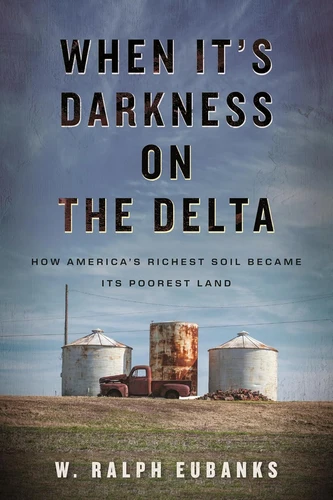
The book opens with a question that feels almost too simple: What happens to a place that was once full of hope and became a symbol of something else entirely? Eubanks doesn’t answer it directly. Instead he walks us through the Mississippi Delta, the richest soil in America and one of its poorest regions. He shows us the sharecropper cabins, the abandoned schools, the churches that still hold services on Sunday mornings.
I’ll be honest. I didn’t want to read another book about Southern tragedy. We have enough of those. But Eubanks does something different. He focuses on the moments when the Delta felt like a promise. When Black farmers first owned their land. When the soil gave back more than they planted. When the future seemed possible. Then he shows how slowly, quietly, that promise was broken.
The protagonist here isn’t a person. It’s the land itself. And the way Eubanks writes about it, you feel like the Delta is a character who remembers everything. The floods, the cotton prices, the deals made in back rooms. The land holds it all.
The Weight of What Remains
The core theme, I think, is this: history doesn’t leave. It stays in the soil, in the water, in the shape of the roads. Eubanks shows us how the plantation economy didn’t end. It just changed forms. The same fields that grew cotton for slave labor now grow soybeans for multinational corporations. The same families who owned the land still own it. The same families who worked it still work it.
There’s a subtle light in the book too. Eubanks finds it in the small acts of resistance. The grandmother who saved her sharecropping wages and bought a tiny plot of land. The church that became a school. The farmers who formed cooperatives when nobody would lend to them. These moments don’t erase the darkness. They just prove that people kept trying.
I found myself thinking about my own town while reading. The factory I mentioned earlier. It closed when I was twelve. We never talked about who got sick from the water. We never talked about whose families were pushed out to make room for it. Reading Eubanks, I realized that silence isn’t absence. It’s a kind of presence. A heavy one.
What We Carry Forward
Here’s what Eubanks helped me see. The question isn’t whether we can escape history. It’s whether we can learn to live with it honestly. The book doesn’t offer solutions. It doesn’t pretend that knowing the past fixes anything. But it insists that pretending the past is over is a form of violence.
Maybe that’s what I needed to hear. That my town’s silence wasn’t peace. It was a holding pattern. And holding patterns don’t last forever.
I recommend this book to anyone who has ever wondered why certain places feel heavy. To anyone who has walked through their hometown and felt something unresolved in the air. It’s not an easy read. But the truth rarely is. And sometimes the truth is exactly what we need to finally start moving.
