I went to a funeral recently. A young man, twenty-four, gone by his own hand. His mother stood at the podium and said: “We didn’t know. He never told us.” And I sat there thinking about Meg Kissinger’s family. About the Kissingers of Milwaukee, with their seven children and their lake house and their Catholic faith. About the things they knew but didn’t say. About the things they said but nobody heard.
So here is the question this memoir asks, and it is a terrible one: What does it cost a family to keep a secret? And what does it cost to finally, truly, break it?
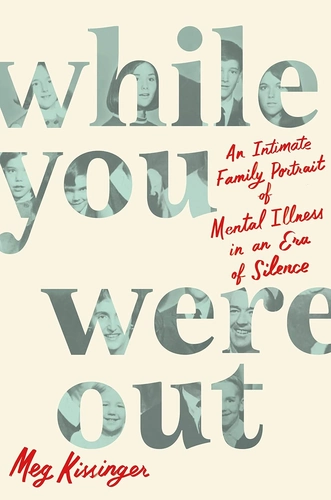
The Protagonist Who Could Not Look Away
Meg is the second oldest of seven. Her father is a charismatic salesman with a temper that comes and goes like summer storms. Her mother is a woman who prays the rosary and pretends everything is fine. And the children? They are a study in survival.
There is Danny, the brilliant older brother who hears voices. There is Nancy, who tries to fix everyone until she cannot fix herself. There is Michael, who burns with rage. There is Kathy, who was supposed to be the happy one. And there is Meg, the journalist in training, the one who watches, who notes, who files away the details she will later need.
I have to be honest: I almost put this book down in the first fifty pages. Not because it was bad. Because it was too familiar. The way the family tiptoes around Dad’s moods. The way Mom says “your father is just tired.” The way the children learn to read a room like a survival manual. I recognized that dance. Maybe you will too.
The core conflict is not really about Danny’s schizophrenia or Nancy’s depression. It is about the space between what is happening and what is said about what is happening. That space is where the Kissinger children grew up. And that space, as Meg shows us, is where people die.
She does not give away the ending. She does not have to. We know from the first chapter that two of her siblings will kill themselves. What we do not know is how the rest of them survive. That is the suspense that kept me turning pages, even when I wanted to look away.
The Craft of Looking Without Flinching
The core theme here is silence. Not the quiet kind. The active kind. The kind where everyone agrees, without ever agreeing, that some things are better left unsaid.
Meg Kissinger is a journalist by training, and she uses that training like a surgical tool. She interviews her surviving siblings. She reads medical records. She goes back to the police reports. She does something almost impossible: she looks at her own family with the same cold eye she would turn on a government scandal.
The key imagery that haunts me is the telephone. Over and over, a phone rings in the middle of the night. Someone picks up. Someone delivers news. Someone hangs up. And then the family goes back to pretending. The phone becomes a symbol of the news that keeps arriving, the truth that keeps intruding, the reality that the family keeps trying to wallpaper over.
I was struck by a small detail. Meg describes how, after Danny’s first breakdown, her father took the family on a road trip to Yellowstone. They drove for days. They looked at geysers. They took photographs. Nobody mentioned what had happened. The trip was a lie dressed up as normalcy. And that lie, Meg suggests, was more damaging than the breakdown itself.
She writes in short, punchy sentences. This is not a lyrical memoir. It is a report from the front lines of a family war. She does not let herself get sentimental. She lets the facts do the work. And the facts, as she presents them, are devastating.
I will say one thing that surprised me: the humor. There are moments in this book that made me laugh out loud. The way Meg describes her mother’s passive-aggressive notes. The way the siblings compete for the last slice of pizza even while one of them is hallucinating. It sounds wrong, to laugh at any of this. But it is exactly right. That is how families survive. They joke. They keep eating. They keep living.
What the Silence Actually Protected
I finished this book on a Tuesday morning, sitting in my kitchen, and I did not know what to do with myself. So I called my sister. Just to talk. Just to say hello.
Here is what I learned from Meg Kissinger: the silence we keep about mental illness is not protecting anyone. It is not protecting the person who is suffering. It is not protecting the children who grow up watching that suffering. It is not protecting the family name. It is protecting something much smaller. It is protecting the illusion that we are normal, that we are fine, that we are in control.
The book has a few weaknesses. Meg is so disciplined in her journalist mode that sometimes I wanted her to let go, to rage, to scream on the page. She holds back. She stays composed. I understand why she does it. But I wanted more of her raw self, less of her reporter self.
Who is this book for? It is for anyone who has ever whispered about a family member’s “nervous breakdown.” It is for anyone who has ever said “we don’t talk about that.” It is for anyone who has ever watched someone they love disappear into a illness that has no visible wound.
What you will get from reading it is not hope, exactly. It is something more useful. It is permission. Permission to say the thing you have been told not to say. Permission to pick up the phone. Permission to ask the question you are afraid to ask.
The last image of the book stayed with me. Meg is at her sister’s grave. She is talking to Nancy. She is telling her about her life, her children, her work. She is doing what she could not do when Nancy was alive: she is speaking openly, without shame, without editing.
Maybe that is what love really is. Not the absence of loss. But the willingness to keep talking, even when the other person can no longer answer.
