You have probably done this before. Swiped a credit card knowing you cannot pay it off this month. Checked your bank balance and felt that familiar drop in your stomach. Told yourself you would start saving next month. And next month came, and you did not.
It is not a character flaw. It is a knowledge gap. Nobody taught you this stuff. The three books below will help you close that gap. Each one starts from a different place.
Best Book For Breaking The Paycheck Cycle
1. From Debt to Wealth by Owen Pierce
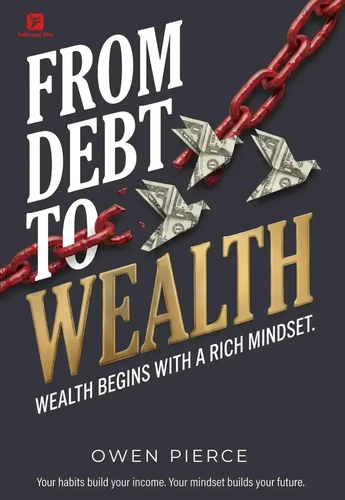
This book assumes you are in the hole. Not because you are irresponsible, but because nobody ever showed you how money actually works. It walks you through the mechanics of escaping the cycle: building a buffer without feeling deprived, handling debt in a way that does not require superhuman discipline, and creating a system that works even when motivation runs out.
The book is practical, not inspirational. Pierce starts with a question that actually matters: why does your income never feel like enough? The answer is not about willpower. It is about habits you were never taught to break.
What sets this book apart is its honesty about where most people actually start. It does not assume you have savings. It does not assume you have extra income. It assumes you are stuck, and it gives you a path out.
What you will learn from ‘From Debt to Wealth’:
- How to break the paycheck-to-paycheck cycle without superhuman discipline
- How to pay down debt without feeling deprived
- How to build savings when you have never been able to keep them
- Why earning more money does not solve the problem if your habits stay the same
- How to shift from survival mode to building mode
Once you understand how to manage your money, the next step is learning how to build long-term wealth.
Best Book For Reframing What Money Actually Means
2. Your Money or Your Life by Vicki Robin
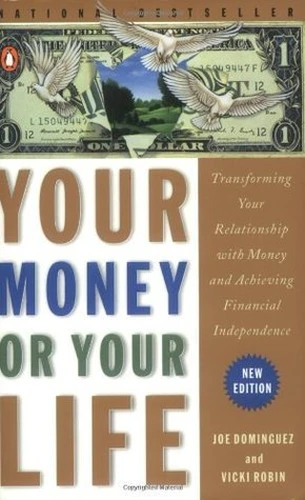
This is a classic for a reason. Robin asks a simple question with a powerful answer: what is money actually for?
The book reframes money as life energy. Every dollar you spend is a piece of your time, your attention, your energy. Once you see it that way, spending decisions become something else entirely. You stop asking “can I afford this?” and start asking “is this worth my time?”
Robin walks you through a nine-step program that starts with tracking every penny and ends with rethinking your entire relationship with money. The program is thorough and requires effort, but the payoff is lasting.
What makes this book different is the shift in perspective. Most money books tell you what to do. This one changes how you see. The shift is subtle but permanent. You stop thinking about money as something you manage and start seeing it as something you trade your life for.
What you will learn from ‘Your Money or Your Life’:
- How to calculate your real hourly wage (it is lower than you think)
- Why most of what you buy is not worth the time it cost you
- How to track spending without feeling punished
- What money is actually for—and what it is not
- How to align your spending with your values
Best Book For Answering The Questions You Were Too Afraid To Ask
3. The Money Book for the Young, Fabulous & Broke by Suze Orman
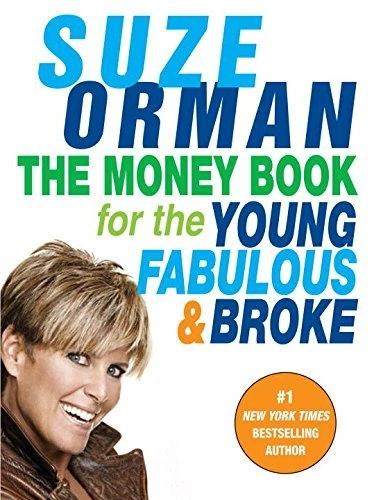
Orman wrote this specifically for people in their twenties and thirties who are just starting out. The book covers everything: credit scores, student loans, car payments, first apartments, and the anxiety that comes with being young and not knowing what you are doing.
It is straightforward, practical, and honest about how hard it is to get started. Orman does not talk down to you. She explains things clearly, with the kind of bluntness that comes from someone who has seen people make the same mistakes over and over.
What makes this book useful is its comprehensiveness. It does not just cover one aspect of money management. It gives you a complete picture of what you need to know at this stage of your life. If you feel like everyone else figured this out and you are the only one still confused, this book will make you feel less alone.
What you will learn from ‘The Money Book for the Young, Fabulous & Broke’:
- How credit scores actually work
- Whether to pay off debt or save first
- What happens if you miss a payment
- How to handle student loans without drowning
- How to build a financial foundation in your twenties and thirties
Frequently Asked Questions
What if I am completely overwhelmed and do not know where to start?
Start with Pierce’s book. It assumes you are starting from behind, and it gives you a clear path forward without assuming you already have money to work with. The other two books are valuable, but Pierce meets you where you actually are.
What if I already have some savings and just want to be more intentional?
Start with Robin. Her book will help you think differently about what money means and how you want to spend your life energy. It is less about mechanics and more about philosophy—but the philosophy leads to practical changes.
What if I am young and just want a complete overview?
Start with Orman. She covers everything you need to know at this stage of your life, from credit scores to student loans to first apartments. It is a solid foundation that answers the questions you were too afraid to ask.
Can I read just one of these books and still get value?
Yes. Each book stands on its own. They just cover different aspects of money management. The right one depends on where you are starting from.
