Quick Answer
How to deal with separation anxiety in babies at night starts with understanding that it’s normal, usually peaking between 9–12 months. Effective strategies include: waiting 30–60 seconds before responding, maintaining a consistent bedtime routine, using familiar scent cues, practicing gentle self-soothing methods (pick-up-put-down), and expecting gradual improvement by 14 months. If you’re wondering how can I help a child with separation anxiety, the answer lies in small, consistent, predictable responses.
Separation anxiety in babies at night is a normal developmental stage that usually peaks between 9–12 months.
What helps most:
- Wait 30–60 seconds before responding
- Keep bedtime routine consistent
- Avoid inconsistent co-sleeping
- Use familiar scent cues
- Expect improvement after 14 months
Quick Summary (TL;DR)
- Wait 30–60 seconds before going in – gives baby a chance to self-settle.
- Keep bedtime routine consistent – bath, book, same song every night.
- Avoid “just this once” changes – co-sleeping one night backfires.
- Use scent + calming cues – familiar smell on crib sheet helps.
- Expect improvement after 14 months – peak is 9–12 months.
Why You Should Trust This Guide
I’m not a sleep consultant or pediatrician. I’m a parent sharing what I tried over months of night wakings, based on real experience and guidance from our pediatrician. This is what actually helped us — and what didn’t.
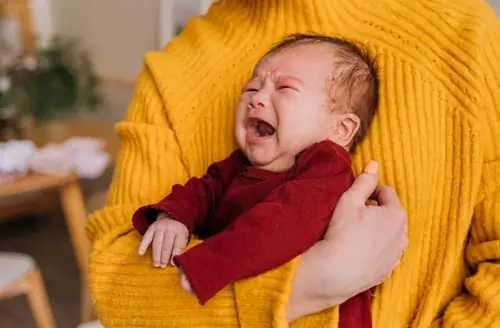
If you’re dealing with separation anxiety in babies at night, you’re not alone — this phase can feel overwhelming. Your baby won’t sleep, often cries when left alone, and baby wakes up screaming at night can become a regular event. Recognizing baby separation anxiety at night symptoms — like crying the second you leave or refusing to settle without you — is the first step.
As a parent, I had to figure out how can I help a child with separation anxiety in a way that worked for us — not just what sounded good in books. My nine-month-old son suddenly started screaming every time I left the room at night. What I thought was a sleep regression turned out to be separation anxiety. His night wakings became more frequent, and sleep quickly became harder for both of us.
Over the next few months, I tried everything: rushing in immediately, changing routines, co-sleeping out of desperation, even sleeping with his crib sheet. Some things made it worse. A few things actually helped.
If your baby suddenly won’t sleep unless you’re nearby, here’s what finally made a difference for us — including methods that helped, ones that backfired, and tips you can try tonight.
What Causes Separation Anxiety in Babies at Night (Understanding First)
I remember it like it was yesterday. I had just tiptoed out of his room after a long bedtime routine, hoping for a quiet evening. I made it to the kitchen — heart racing, ears straining — when I heard it. Not his usual hungry fuss, but a new sound. Scared. Almost betrayed. My stomach knotted. My body froze.
What is night separation anxiety? Our pediatrician explained it like this: babies realize you are a separate person and can leave — a normal developmental milestone rooted in attachment theory. In rare cases, persistent distress can relate to early attachment patterns in toddlers, including signs of unhealthy child attachment in toddlers, though for most babies this phase is temporary.
To know how to deal with separation anxiety in babies at night, you first need to accept that this is a phase, not a behavior problem. Separation anxiety in babies at night typically peaks between 9–12 months and gradually improves after 14 months with consistency.
What to Do When Baby Wakes Up Screaming at Night (Immediate Response)
How can I help a child with separation anxiety in the middle of the night? Waiting thirty seconds before going in was the first thing that helped. I chose this because I needed a way to reduce his distress without fully disrupting his sleep cycle.
A friend told me: “Just wait thirty seconds.” I thought she was crazy. My baby was crying. How could I wait?
The next night, he woke up again. I stood in the hallway, heart pounding, counting in my head. One… two… three… I wanted to run to him. By twenty, his cry had softened. By thirty, it turned into a fuss. I pushed the door open slowly. He was rubbing his eyes, not even fully awake.
Why waiting works: From what I learned, babies have short sleep cycles — about 45 to 60 minutes. Between cycles they often make noise without fully waking. If you rush in immediately, you train them to need you to connect those cycles. A short pause gives them a chance to settle on their own.
This didn’t work for us at first — he cried harder on night one. But after three nights, the screaming reduced significantly. It didn’t eliminate crying completely, but it made it shorter.
How to Calm a Baby Who Cries When You Leave the Room (Environmental Cues)
A weird trick that actually helped
On a desperate night around 10 months, I tried sleeping with his crib sheet for a night, then putting it back on the mattress. Your scent stays on it. I thought it sounded ridiculous, but I was exhausted. So I did it. The next night, his first stretch of sleep went from 45 minutes to 2 hours. I chose this because I wanted to give him a sense of safety without being physically present.
How scent helps: Our pediatrician confirmed that babies recognize your scent as a safety signal. When they can’t see you, smelling you tells them you’re still nearby.
This reduced crying but didn’t eliminate it. He still woke up, but he settled faster. It only started helping after I used it consistently for several nights.
Gentle Sleep Training for a 10 Month Old Who Won’t Sleep Alone
The pick-up-put-down method was exhausting, but it worked. This is one gentle sleep training approach that doesn’t require crying it out. I chose this because I wanted to teach self-soothing without breaking his trust.
The first night I tried it, I picked him up and put him down seventeen times. Sitting on the floor next to the crib, I told myself: this is how he learns. By night three, it was down to four times. By night five, twice.
How it works: Falling asleep in your arms and waking up alone is disorienting for a baby. Pick-up-put-down helps them learn to fall asleep in the same place they’ll wake up.
This didn’t work for us at first. The first two nights were brutal. It only started helping after I committed to it for a full week. It reduced night wakings but didn’t stop them entirely.
A Consistent Bedtime Routine for Babies (Long-Term System)
A predictable bedtime routine became our turning point. I chose this because babies thrive on predictability — it reduces the anxiety of not knowing what comes next.
I used to be inconsistent. Some nights I’d rock him for five minutes, other nights twenty. Some nights I’d sing, other nights I’d just put him down and leave. So I got strict with myself. Every single night: bath, two books, one short song. Same song every time.
After a few weeks, the song became a signal. By the time I started singing, he already knew what was coming. Sleep.
Why a routine works: The American Academy of Pediatrics says a predictable routine helps babies feel safe during separation. It doesn’t have to be long. It just has to be the same.
This reduced crying but didn’t eliminate it. He still fussed sometimes. The improvement came slowly — after two weeks, night wakings dropped from 4–5 times to 2–3.
Why My Baby’s Separation Anxiety Got Worse at Night (Mistakes to Avoid)
I made plenty of mistakes that increased night wakings.
Co-sleeping “just this once.” He slept great. I slept great. The next night, he screamed even harder when I tried to leave. That one night cost me a week of struggle. Babies thrive on predictability.
Changing the bedtime routine from night to night. When I finally stuck to the same short routine every night, things got noticeably easier.
Rushing in at every peep. He learned that any sound would bring me running. Once I started pausing — just thirty seconds — he started settling himself more often.
Common Nighttime Triggers
- Sleep regression (e.g., 8–10 months, 12 months)
- Illness or teething (pain and discomfort increase clinginess)
- Changes in routine or environment (travel, new bedroom, returning to work)
- Family stress or parental travel (baby senses anxiety or absence)
Recognizing these triggers helped me stop blaming myself — and start planning ahead.
Signs Baby’s Separation Anxiety Is Improving at Night
Night wakings decrease in frequency
- Shorter crying episodes (from 20 minutes to 5, then to just a few sniffles)
- Baby settles faster without parent intervention (falls back asleep alone)
- Able to self-soothe for a few minutes before waking fully
- Recovery after setbacks (holidays, illness) happens faster
Celebrate these small wins. Progress isn’t linear, but these signs mean it’s working.
Summary: Methods That Helped Us
| Method | How It Helps | Notes |
| Wait 30–60 seconds | Allows self-settling | Short pause, not ignoring completely |
| Consistent bedtime routine | Predictability reduces anxiety | Bath, book, song, same order |
| Pick-up-put-down | Teaches self-soothing | Gradually reduces dependence |
| Scent cues | Provides sense of safety | Sleep with crib sheet |
| Avoid inconsistent co-sleeping | Prevents reinforcement of night waking | “Just this once” backfires |
How Long Night Separation Anxiety Lasts (Night Wakings 9–18 Months)
Around 14 months, something shifted. He started calling for me instead of just screaming. “Mama? Mama?” Like he was checking if I was still there.
I would go in, say “I’m here, go back to sleep,” rub his back for thirty seconds, and leave. He usually settled.
By 18 months, the really hard nights were farther apart. He still wakes up sometimes, but now he rolls over and goes back to sleep on his own. The biggest change wasn’t his sleep — it was my anxiety.
What I Wish I Knew at 3 AM
This phase ends. Not quickly. But it ends.
You don’t have to be perfect.
The nights that feel endless are the ones you’ll barely remember later.
You’re not doing anything wrong.
One Last Night (And the Truth About Progress)
Last week, my son woke up at 3 AM. I went in, rubbed his back for thirty seconds, and left. He rolled over and went back to sleep. A year ago, I was rocking him for an hour.
The nights are still imperfect. But I’ve learned to trust him, and myself.
The goal isn’t to raise a baby who never needs you at night. The goal is to help them learn that you always come back.
Separation anxiety in babies at night is a normal developmental phase, and it gradually improves with consistency and reassurance.

Frequently Asked Questions
How to deal with separation anxiety in babies at night effectively?
Use a short pause (30 seconds), a consistent bedtime routine, familiar scent cues, and gentle methods like pick-up-put-down. The key is predictability, not rushing in.
How can I help a child with separation anxiety during night wakings?
Start by waiting 30–60 seconds before responding. Then use a calm, consistent phrase (“Mama’s here”) and a brief back rub. Avoid picking up unless necessary.
10 month old won’t sleep alone separation anxiety – what to do?
Start with pick-up-put-down or fading (gradually reducing your presence). Avoid cry-it-out at this age. A consistent bedtime routine also helps.
How long does separation anxiety last at night in babies?
It typically peaks between 9–12 months and gradually improves after 14 months with consistency. Most babies show significant improvement by age 2.
Why does my baby cry when I leave the room at night?
Your baby doesn’t yet understand object permanence — leaving feels like disappearing. This is a normal developmental stage, not a behavior problem.
Is it okay to let my baby cry during separation anxiety?
A short pause (under one minute) is fine and helps self-soothing. Prolonged crying or cry-it-out can increase fear. The AAP recommends responsive comfort during this stage.
When should I talk to my pediatrician about night separation anxiety?
If night wakings are accompanied by fever, weight loss, or daytime withdrawal, or if anxiety lasts well past 24 months without improvement.
References
American Academy of Pediatrics. (2024). Separation Anxiety & Sleeping Trouble in Young Children.
Pantley, E. (2012). The No-Cry Sleep Solution. McGraw-Hill Education.
