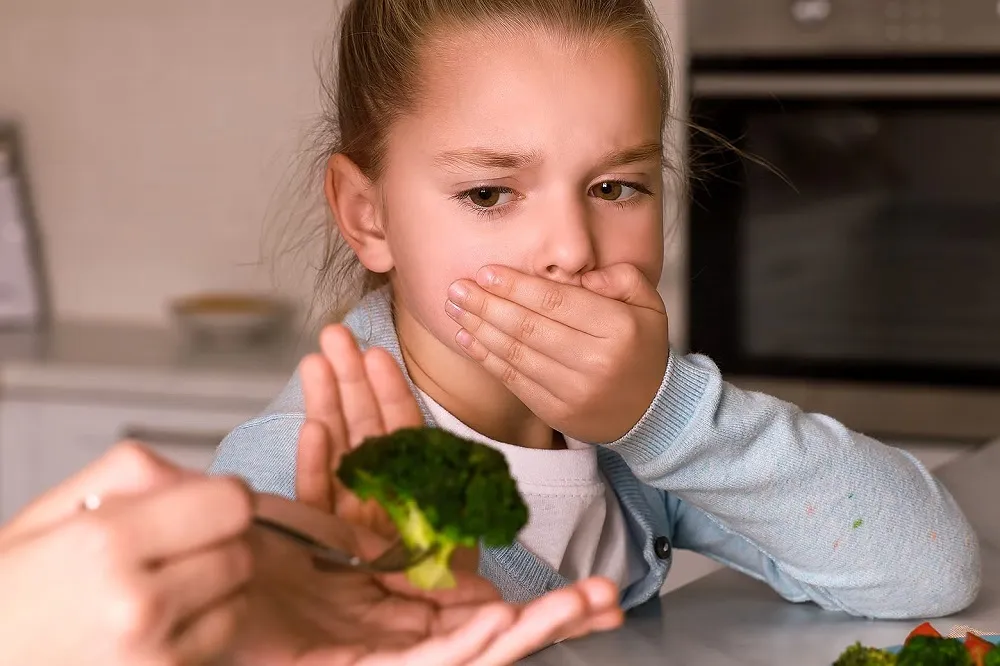
Many parents worry: is my child too picky? Is this normal? The truth is, refusing certain foods is quite common during the toddler years. You may have noticed that your child loves broccoli one day, and the next day pushes it away like it’s an alien. This kind of inconsistency does not necessarily mean there is a problem.
Quick Answer
Most picky eating in toddlers is a normal developmental phase.
The most effective approach is to avoid pressure, follow a structured meal schedule, repeatedly expose children to new foods, and use the division of responsibility approach.
Most children gradually expand their diet over time.
Experts who study child development say that food acceptance in young children is rarely a straight line. A child may love strawberries on Monday and refuse them on Wednesday. That inconsistency is often part of normal growth, not a sign that something is wrong. Most of the time, picky eating is a phase that gradually improves without major intervention.
Why Toddlers Become Picky Eaters
There is usually not one single reason. A few things often come together.
Developmental independence : Between roughly two and four years old, many children start wanting control over small decisions. Refusing food can be their way of saying “I get to choose.”
Sensory sensitivity : Some toddlers are more sensitive to how food feels, smells, or even its temperature. Mushy mushrooms, slimy eggs, or warm, soft cheese might genuinely feel unpleasant to them.
Appetite fluctuation : Young children do not grow at a steady pace. On a growth spurt week, they may eat constantly. On a slower week, they might eat very little. Both can be normal.
Learned behavior : If mealtimes come with pressure, screens, toys, or unlimited snacks, toddlers may learn to associate eating with stress—or simply not feel hungry at the table.
When these factors mix, food refusal becomes very common.
How to Deal with Picky Eater Toddler (Practical Strategies That Work)
When it comes to picky eating, many parents naturally focus on one question: “How do I get them to eat this meal?” But over the years, I’ve learned that the strategies that actually make a difference tend to shift the focus away from a single meal and toward the bigger picture—routines, trust, and reducing pressure. Here are five approaches that helped us the most, and that many families find useful.
Don’t pressure or force eating
It can be tempting to say, “Just three more bites” or “You can’t leave the table until you finish your chicken.” And sometimes that works for a night. But over time, pressure tends to turn eating into a power struggle. You have probably seen it: the more you push the spoon, the tighter your toddler’s mouth gets.
Stepping back is harder in the moment, but toddlers generally don’t let themselves starve. They are born with a natural ability to regulate hunger and fullness. Your job is to offer food. Their job is to decide how much (or how little) to eat. When you hand some of that control back to them, they often eat better in the long run.
Use the “division of responsibility”
There is a well-known concept in child feeding called the division of responsibility. In simple terms: you decide what, when, and where to eat. Your child decides whether to eat and how much. Once that boundary is clear, a surprising number of mealtime battles just fade. For example, you put dinner on the table.
Your toddler says no and pushes the plate away. That is fine. You don’t beg, you don’t cook a second meal. The next scheduled snack or meal comes around, and you offer food again. This takes practice, but it removes the impossible job of “making” someone eat, and helps your child learn to listen to their own hunger.
Repeated exposure
Many parents assume that when you offer a new food, you should encourage the child to “at least lick it.” But the advice based on research is often the opposite: just let the new food appear. No cheering, no “just try one bite,” no commentary.
Just put a small amount next to foods your child already accepts. It may take ten to fifteen exposures to a food before a toddler voluntarily touches it, smells it, or puts it in their mouth. This feels slow, but it tends to work more reliably than daily pressure.
Set a structured meal and snack schedule
A big reason toddlers refuse food at the table is simply that they are not hungry enough. If snacks are available all day or the gaps between meals are too long, hunger can be either absent or overwhelming. A loose schedule—meals and snacks about every two to three hours—helps a lot. For example: breakfast, morning snack, lunch, afternoon snack, dinner.
When your child sits down with mild hunger, eating becomes much easier. And if they skip most of a meal? You just wait until the next scheduled snack or meal. No need to panic. A predictable schedule also helps reduce constant asking for snacks.
Combine a safe food with a new food
This strategy saved me many times. At every meal, include at least one food you are pretty sure your child will eat—a few crackers, a cheese slice, some banana pieces, or whatever works in your house. Then add one or two other foods, including new or less-preferred ones. The safe food ensures your child has something to eat.
The other foods just sit there, giving your child a chance to look at them, smell them, and eventually—maybe—touch or taste them. You don’t have to change the new food every day. It is fine to offer the same new vegetable for two weeks straight.
These five strategies are not about being a perfect parent. They are about slowly turning mealtimes from a daily battle into a regular, boring, peaceful part of the day.

What to Feed a Picky Toddler (Easy Meal Ideas)
Instead of complicated recipes, think simple and low-pressure.
Breakfast: Whole grain waffle with yogurt dip, banana oatmeal pancake, or scrambled eggs with cheese (if eggs are accepted).
Lunch : A “deconstructed snack plate” – cheese cubes, cucumber slices, whole grain crackers, a few slices of turkey or shredded chicken, and a small bowl of berries.
Dinner : Mini homemade meatballs (you can mix in finely shredded vegetables), pasta with tomato sauce and one small broccoli floret, or rice with steamed egg and a few edamame beans.
Snacks : Greek yogurt, apple slices with peanut butter (if no allergy), cheese stick, or homemade fruit and veggie popsicles.
The key is not to cook separate meals. Offer options your child can say yes to, but keep one table rule for everyone.
When to Worry About Picky Eating & FAQs
Most picky eating is temporary, but a few signs are worth noticing.
Will my toddler outgrow picky eating?
For many children, yes. Over time and with repeated exposure, most gradually expand what they eat. That said, progress is rarely a straight line—your child might accept a new food one week and refuse it the next, but overall, the direction tends to be slowly forward.
Should I force my toddler to eat?
Not recommended. A consistent meal and snack schedule tends to work better and feels safer than forcing or withholding food. Skipping one meal here and there is not harmful, but deliberately creating hunger over a longer period can sometimes backfire and make mealtimes more stressful for everyone.
How long does picky eating last?
It varies. Some children widen their food choices within months; others take a year or two. Both paths can be normal. Many toddlers are pickiest around age two and start to open up closer to three and a half, while others stay cautious until they start preschool. No two children follow the exact same timeline.
What if my toddler only eats 3–5 foods?
If your child is growing well, has energy, and is generally healthy, this often falls within a normal range. But if the variety keeps shrinking, or you notice low energy or poor weight gain, a check-in with a doctor is a good idea. Some children do live on a very short list of foods for months at a time. As long as their growth curve stays steady, professionals often recommend continuing with gentle, low-pressure exposure.
Consider seeking support if your child is losing weight, gagging or choking frequently during meals, or if picky eating is seriously affecting daily family life.
References
American Academy of Pediatrics – Picky Eaters and What to Do
Ellyn Satter Institute – Division of Responsibility in Feeding
KidsHealth from Nemours – Toddlers and Picky Eating