The argument starts over something small. You ask your child to get dressed, and they insist on choosing an outfit that is completely unsuitable for the weather. You explain why it will not work, they argue that you never let them decide anything, and suddenly you are both stuck defending your positions. By the time you leave the house, the original problem feels much bigger than it needed to be.
Some children question rules, push back against instructions, and want a say in nearly every decision. These traits can reflect persistence, independence, and a strong desire for control, but they can also make ordinary routines exhausting for the whole family. The answer is not necessarily to become stricter or to give in more often. Parents need to know which boundaries must hold, where children can have meaningful choices, and how to respond when disagreement turns into a battle.
The following books approach these challenges from different angles. Some focus on cooperation and discipline, while others help parents understand emotions, communicate more effectively, or establish a consistent response to recurring conflicts.
If you’re looking for ways to set firm boundaries without turning every disagreement into a power struggle, explore these positive discipline parenting books.
1. Setting Limits with Your Strong-Willed Child by Robert J. MacKenzie
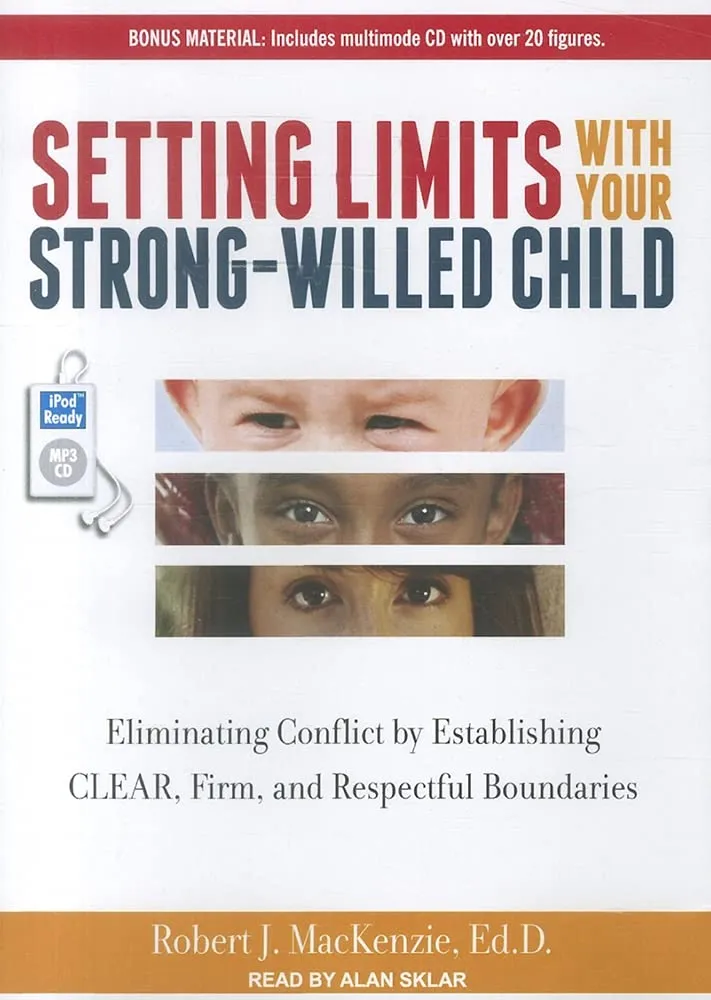
When a child argues about almost every instruction, parents can start explaining the same rule over and over. You say that homework needs to be finished before video games, but your child challenges the rule, negotiates for more time, and waits to see whether you will change your mind. Eventually, the discussion itself becomes a way of delaying the task.
Robert J. MacKenzie’s book focuses on setting clear, consistent limits for children who resist direction. It explores how parents can communicate expectations, follow through on consequences, and avoid getting drawn into repetitive arguments. The emphasis is on making rules understandable and predictable rather than relying on increasingly forceful reminders.
One useful idea is to distinguish between explaining a boundary and debating whether it exists. Parents can listen to a child’s objection without reopening every decision for negotiation. For example, you can acknowledge that your child wants more screen time while keeping the agreed-upon limit in place. The child may still be unhappy, but the interaction does not have to become a prolonged contest.
This book is particularly relevant when a family has become caught in repeated cycles of resistance and inconsistent follow-through. It offers a structured approach for parents who want to be firm without turning every instruction into a confrontation.
Best for: Parents who need clearer limits and more consistent responses to repeated arguing, refusal, and testing of rules.
2. The Parent You Aspire to Be by Miles Carter

Some power struggles are not really about the immediate request. A child refuses to study, lies about finishing homework, speaks rudely when corrected, or becomes overwhelmed when asked to stop using a device. Parents may respond by lecturing, threatening consequences, or repeating instructions, only to find themselves dealing with the same problem the following week.
The Parent You Aspire to Be by Miles Carter addresses everyday parenting challenges involving behavior correction, emotional management, and parent-child communication. Its topics include procrastination, screen overuse, lying, rude language, school resistance, emotional outbursts, sensitivity, and difficulty accepting mistakes. Rather than treating every incident as an isolated act of defiance, the book examines unhelpful parental responses and offers alternative wording and practical steps.
This is particularly useful when parents are unsure how to respond in the moment. A child who refuses to start homework, for instance, may need a clear expectation and a manageable first step rather than another long argument about responsibility. When a child speaks rudely, the parent can address the language directly without responding with insults or escalating the conflict.

The Parent You Aspire to Be
Miles CarterPractical guidance for tantrums, backtalk, lying, screen addiction, emotional outbursts, and everyday parenting struggles.
The book also considers parental emotional regulation. This matters because strong-willed children can be persistent, and a parent’s frustration may rise quickly when the same conflict happens every day. Learning to respond consistently, rather than reacting differently depending on how exhausted you feel, can make expectations easier for children to understand.
Best for: Parents who want practical ways to address recurring behavior problems, communicate expectations, and stay composed when children push back.
3. The Explosive Child by Ross W. Greene
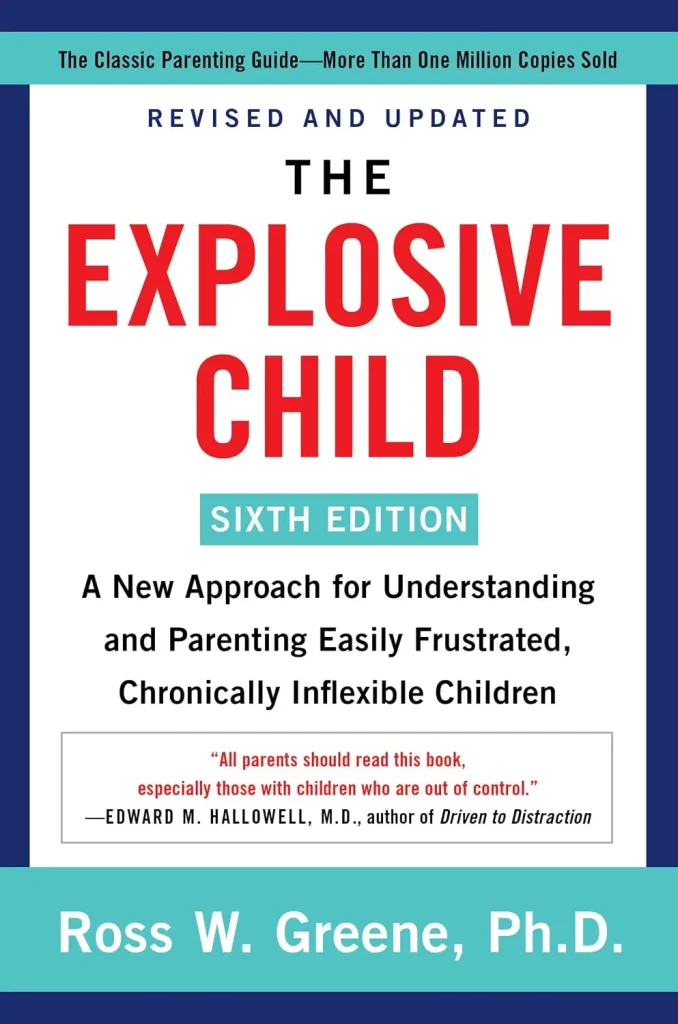
Some children do not simply argue about a rule. They become intensely frustrated when a plan changes, a task feels difficult, or an expectation conflicts with what they had in mind. A minor disappointment can lead to shouting, refusal, or a meltdown that seems disproportionate to the original issue. In these situations, repeating the instruction more firmly may not address what is driving the reaction.
Ross W. Greene’s The Explosive Child presents a collaborative approach to children who struggle with frustration and inflexible responses. The book emphasizes identifying the situations in which a child has difficulty meeting expectations and working together to solve recurring problems. Instead of assuming that the child is deliberately being difficult, parents are encouraged to examine the skills and circumstances involved.
This approach shifts the question from “How do I make my child obey?” to “What is making this expectation so difficult, and how can we solve the problem?” A child who repeatedly melts down during homework may be struggling with the task itself, frustration tolerance, or the transition into work. Understanding the pattern can help parents find a more effective response than repeating threats.
Collaborative problem-solving does not mean that children get to set every rule. Parents still have responsibilities and limits to maintain. The difference is that recurring conflicts become problems to work through together instead of battles that one person must win.
Best for: Parents dealing with intense outbursts, inflexible behavior, and recurring conflicts that do not improve with conventional discipline alone.
4. How to Talk So Kids Will Listen & Listen So Kids Will Talk by Adele Faber and Elaine Mazlish
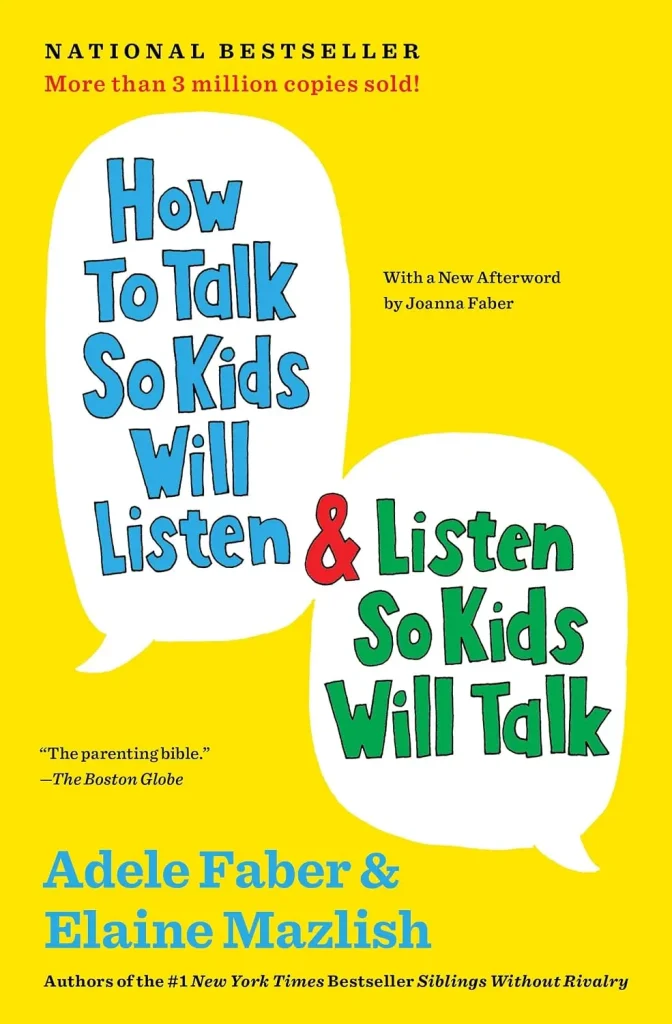
A strong-willed child may hear an instruction as a challenge to their independence, particularly when they already feel controlled. “Put your shoes away” becomes “You are always telling me what to do,” and the conversation shifts from the task to the child’s resistance. The more the parent insists, the more determined the child becomes to push back.
Adele Faber and Elaine Mazlish explore how everyday communication can encourage cooperation without dismissing children’s feelings. Their approach includes acknowledging emotions, describing problems without attacking character, and giving children opportunities to participate in finding solutions. These strategies can help parents communicate expectations without turning every correction into a personal criticism.
For example, instead of saying, “You never listen,” a parent can state what needs to happen and why: the shoes are blocking the doorway, and they need to be put away before the family leaves. The instruction is still clear, but it avoids making a sweeping judgment about the child’s character. When children feel that their perspective has been heard, they may be more willing to engage with the actual problem, even if they do not immediately agree.
This book is most helpful when the emotional tone of everyday conversations is contributing to resistance. It will not remove every disagreement, but it can give parents a more constructive way to handle them.
Best for: Parents whose children react defensively to instructions and who want to improve cooperation through clearer, more respectful communication.
If daily disagreements over rules and expectations are becoming exhausting, these books about positive discipline and boundaries offer another way to approach cooperation and behavior.
5. Positive Discipline by Jane Nelsen
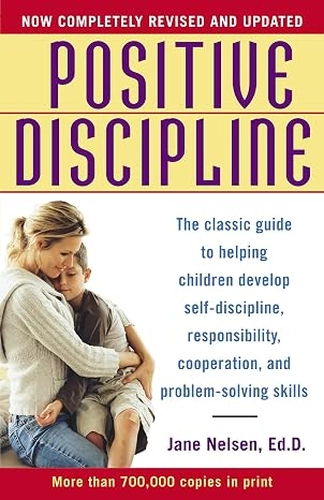
A child refuses to tidy up, so the parent threatens to remove a favorite activity. The child protests, the parent raises the stakes, and the original task becomes a fight over control. Even if the child eventually complies, the same argument may return the next day because the underlying habits have not changed.
Positive Discipline by Jane Nelsen focuses on combining kindness with firmness. It encourages parents to teach responsibility, cooperation, and problem-solving rather than relying entirely on punishment or giving in to avoid conflict. Children are treated as active participants in learning how their choices affect others and what they can do to put things right.
The approach is particularly relevant when parents feel trapped between two unsatisfying options: being so strict that every interaction becomes a battle, or being so accommodating that rules lose their meaning. A parent can maintain a non-negotiable expectation while allowing the child some choice in how to meet it. For instance, the room needs to be tidied before bedtime, but the child can decide which toys to put away first.
Positive discipline takes consistency and practice. It does not promise immediate cooperation, but it helps parents focus on building skills that can reduce conflict over time, rather than simply trying to stop the behavior in the moment.
Best for: Parents who want children to develop responsibility and cooperation while maintaining clear, respectful boundaries.
When Every Request Turns Into a Negotiation
If your child challenges almost every instruction, it can be tempting to choose one of two extremes: explain everything until they agree, or stop discussing anything and demand immediate obedience. Neither approach works well in every situation. A more useful starting point is to decide which expectations are essential and where your child can exercise genuine independence.
Try sorting daily conflicts into three groups:
- Non-negotiable limits: Safety, respectful treatment of others, and essential family rules. State these clearly and follow through consistently.
- Choices you can share: Clothing within reasonable limits, the order of chores, or which homework task to begin first. Offering a real choice can give a child some control without abandoning the expectation.
- Problems that need investigation: Repeated homework refusal, intense reactions to transitions, or persistent difficulty with a particular routine. Look for patterns and consider whether the child needs a different kind of support.
The distinction matters because not every disagreement calls for the same response. A child refusing to wear a seat belt needs a firm safety boundary. A child resisting a difficult assignment may need help breaking the work into smaller steps. Treating both situations as simple disobedience can leave the real problem unresolved.
If you are looking for a practical starting point, choose the book that most closely matches the pattern you see at home. Setting Limits with Your Strong-Willed Child focuses on consistency and boundaries, while The Explosive Child offers a collaborative approach to recurring, intense conflicts. The Parent You Aspire to Be is another option for parents who want concrete guidance on behavior correction, communication, and managing their own reactions. The aim is not to eliminate your child’s strong opinions, but to help your family disagree without getting trapped in the same power struggle every day.
Did this article help you see things differently? Our books turn helpful ideas into practical tools you can return to anytime.



Break the Anxiety Circle
$19.90

From Debt to Wealth
$19.90


